
Home › Bakken Insights › Longer laterals
Oil & Gas Production · North Dakota
Three-mile and four-mile laterals: what longer wells mean for the Bakken
The average new Bakken well now reaches more than 14,000 feet sideways through the rock, a third farther than in 2023. Here is what three-mile, four-mile and U-shaped wells are, how many North Dakota has approved, why they let the state produce more oil with fewer rigs, and who feels the change on the ground.
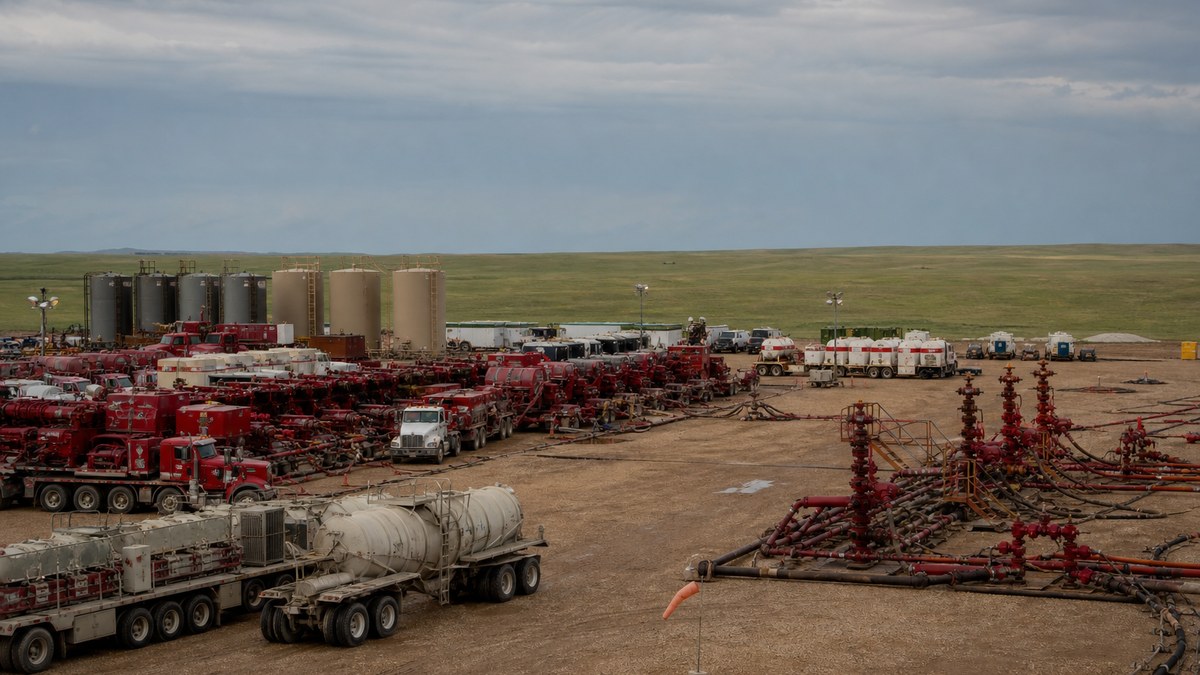
Longer laterals are horizontal Bakken wells drilled about three or four miles through the rock instead of the traditional two. As of North Dakota's October 20, 2026 Director's Cut, the average completed lateral hit a record 14,252 feet in the third quarter, 56% of new permits were three-mile wells and 17% were four-mile wells. Longer wells reach more rock per rig, which is why output is rising while rig counts stay modest.
- Average completed lateral: 14,252 feet per well in Q3 2026, an all-time high, up from 10,554 feet in 2023 and 11,769 feet in 2025 (ND DMR, Director's Cut Oct 20, 2026; Q3 figure pending additional data).
- Permit mix: about 27% two-mile, 56% three-mile and 17% four-mile laterals, versus about 66% / 22% / 12% in the May 22, 2026 Director's Cut.
- Permits issued to date: 1,576 three-mile, 435 four-mile (108 completed) and 54 U-shaped laterals (19 completed) (ND DMR, Oct 20, 2026).
- Production: 1,161,427 barrels per day in August 2026 from a record 20,177 producing wells, 5.6% above the state revenue forecast.
- Activity: DMR listed 31 rigs for October (34 at its mid-month count) and 8 frac crews, up from 24 rigs in July and August.
- Next frontier: the DMR director told lawmakers in March 2026 he had seen the state's first five-mile spacing case, but did not expect wide adoption without a big change in economics.
For most of the Bakken boom, the standard well was simple to describe: drill down about two miles, turn, and drill sideways about two miles through the Middle Bakken or Three Forks. That two-mile lateral, roughly 10,000 feet, matched North Dakota's standard 1,280-acre spacing unit of two square-mile sections, and the industry built its rigs, pads, pipe and service schedules around it.
That standard is breaking. North Dakota's operators are now permitting more three-mile wells than two-mile wells, four-mile wells are moving from experiment to program, and a small but growing number of U-shaped wells turn around underground and come back. The change is quiet, because it does not come with a ribbon cutting, but it is one of the biggest new "projects" in the Bakken: a redesign of how the basin is developed.
In our overview of new Bakken projects we named longer laterals as one of the forces shaping North Dakota through 2030. This article explains what is changing, how far it has gone, what the data says about performance, and what it means for operators, mineral owners and the companies that service the field.
What is a three-mile or four-mile lateral?
A lateral is the horizontal section of a well, the part that runs sideways through the oil-bearing rock and is fractured to let oil flow. In the Bakken, wells are first drilled vertically to roughly two miles deep, then curved to horizontal. The "mile" label refers to the length of that horizontal section and the spacing unit it crosses:
- Two-mile lateral: about 10,000 feet, across two one-square-mile sections (a 1,280-acre unit). This was the Bakken's workhorse design for a decade.
- Three-mile lateral: about 15,000 feet, across three sections (1,920 acres).
- Four-mile lateral: about 20,000 feet, across four sections (2,560 acres). Chord Energy described its first four-mile well, completed in early 2025, as having a total measured depth of more than 30,400 feet (Hart Energy, 2025).
- U-shaped (horseshoe) lateral: a well that drills out one lateral, makes a U-turn underground and drills a second leg back toward the pad. It reaches about the same rock as a longer straight well where the acreage shape or lease lines do not allow one.
Because North Dakota spacing units are built from one-mile sections, a longer well usually means a larger spacing unit. Chord has explained that a four-mile unit is created by combining two existing two-mile units (Hart Energy, 2025). Every larger unit requires a hearing before the North Dakota Industrial Commission, which is one reason the DMR reports an elevated number of oil and gas hearing cases (North Dakota Legislature Budget Section, March 18, 2026).
How fast are Bakken laterals getting longer?
Quickly, and the pace picked up in 2026. The DMR tracks the average completed lateral per well. After hovering around 10,000 feet from 2020 to 2022, the average started to climb in 2023 and jumped in 2026:
| Year | Average completed lateral per well | Source |
|---|---|---|
| 2020 | 10,062 ft | ND DMR, Director's Cut May 22, 2026 |
| 2021 | 9,850 ft | ND DMR, May 22, 2026 |
| 2022 | 10,141 ft | ND DMR, May 22, 2026 |
| 2023 | 10,554 ft | ND DMR, Oct 20, 2026 |
| 2024 | 11,138 ft | ND DMR, Oct 20, 2026 |
| 2025 | 11,769 ft | ND DMR, Oct 20, 2026 |
| Q1 2026 | 13,441 ft (record at the time) | ND DMR, May 22, 2026 |
| Q3 2026 | 14,252 ft (all-time high, pending additional data) | ND DMR, Oct 20, 2026 |
KFYR summarized the trend in October 2026: recent data suggest Bakken laterals are about 2,800 feet longer than three years ago (KFYR, October 15, 2026). The permit mix shows the change is accelerating rather than leveling off. In May 2026, the DMR reported about two-thirds of permits were for two-mile wells. Five months later, two-mile wells were down to about a quarter, and three-mile wells had become the majority.
| Measure | May 22, 2026 Director's Cut | Oct 20, 2026 Director's Cut |
|---|---|---|
| Share of permits, 2-mile | ~66% | ~27% |
| Share of permits, 3-mile | ~22% | ~56% |
| Share of permits, 4-mile | ~12% | ~17% |
| 3-mile permits issued to date | 1,384 | 1,576 |
| 4-mile permits issued to date | 251 | 435 (108 completed) |
| U-shaped permits issued to date | 32 | 54 (19 completed) |
Note that the permit-share figures describe recent permitting, not the whole basin. Most of North Dakota's 20,177 producing wells are still two-mile or shorter wells drilled in earlier years.
Why are operators drilling longer wells?
The short answer is cost per barrel. Much of the cost of a Bakken well is spent getting to the target: moving the rig, building the pad, drilling the vertical section and the curve. A longer lateral spreads those fixed costs over more productive rock. DMR Director Nathan Anderson put it plainly to lawmakers in March 2026: longer laterals are "really what is driving the efficiencies" (Budget Section, March 18, 2026).
Operator data points the same way. Chord Energy said in 2025 that on its western acreage, three-mile wells delivered about 50% more estimated ultimate oil recovery than two-mile wells for about a 20% increase in cost, and that three-mile wells outside the core could match or beat two-mile wells inside it (Hart Energy, 2025). That second point matters: longer laterals turn second-tier acreage into economic inventory, extending the life of the basin.
The midstream side sees a benefit too. Hess Midstream, which handles most of Chevron's Bakken volumes, cut its 2026 capital budget to about $100 million, about a third below prior guidance, in part because Chevron's move to longer laterals means "fewer wells are needed" and fewer well connections have to be built. CEO Jonathan Stein said longer laterals "make wells more economic by decreasing the breakeven" (RBN Energy, May 2026, on Hess Midstream's May 4 earnings call).
- Fewer pads and roads per barrel produced, which reduces surface disturbance and construction cost.
- Fewer wells to connect to gathering lines, power and water systems.
- More inventory from acreage that was marginal with two-mile wells.
- Lower breakevens, which matters in a basin where BloombergNEF put the breakeven for new wells at about $58 per barrel in early 2026 (Valley News Live, January 19, 2026).
Longer laterals change what "activity" means in the Bakken. A rig drilling four-mile wells can put more rock into production in a year than a rig drilling two-mile wells, so the rig count understates the work being done. For service companies and suppliers, the better indicators are completed lateral footage, frac crew counts and pad size. A single four-mile pad can concentrate months of sand, water, pipe and equipment demand at one location, then go quiet for years.
Do longer laterals actually produce more oil?
Yes, per well, and the early evidence suggests the extra length is not wasted, but the four-mile question is still open. The case for three-mile wells is now well established: they are the majority of new permits and multiple operators have built programs around them. Chord's 2025 description was that a three-mile well "will deliver a slightly higher IP, stay flat longer" (Hart Energy, 2025).
Four-mile wells are newer. Chord reported in August 2026 that it had executed 26 four-mile wells and that four-mile capital costs were "in line with expectations," but management also said it needs more time to judge how much the fourth mile adds (Chord Energy second-quarter 2026 results, August 5, 2026; MarketBeat via Nasdaq, August 6, 2026). Statewide, 108 four-mile wells had been completed by October 2026 (ND DMR). That is enough to see early trends, not enough to know long-term recovery.
There are physical limits to watch. Longer wells are harder to drill, case and clean out; friction and pressure losses grow with distance; and fracturing the far end of a 20,000-foot lateral takes more pumping capacity and time. The DMR director's comment that he did not expect large-scale five-mile development unless economics change significantly suggests the industry sees four miles as near the practical limit for now (Budget Section, March 18, 2026).
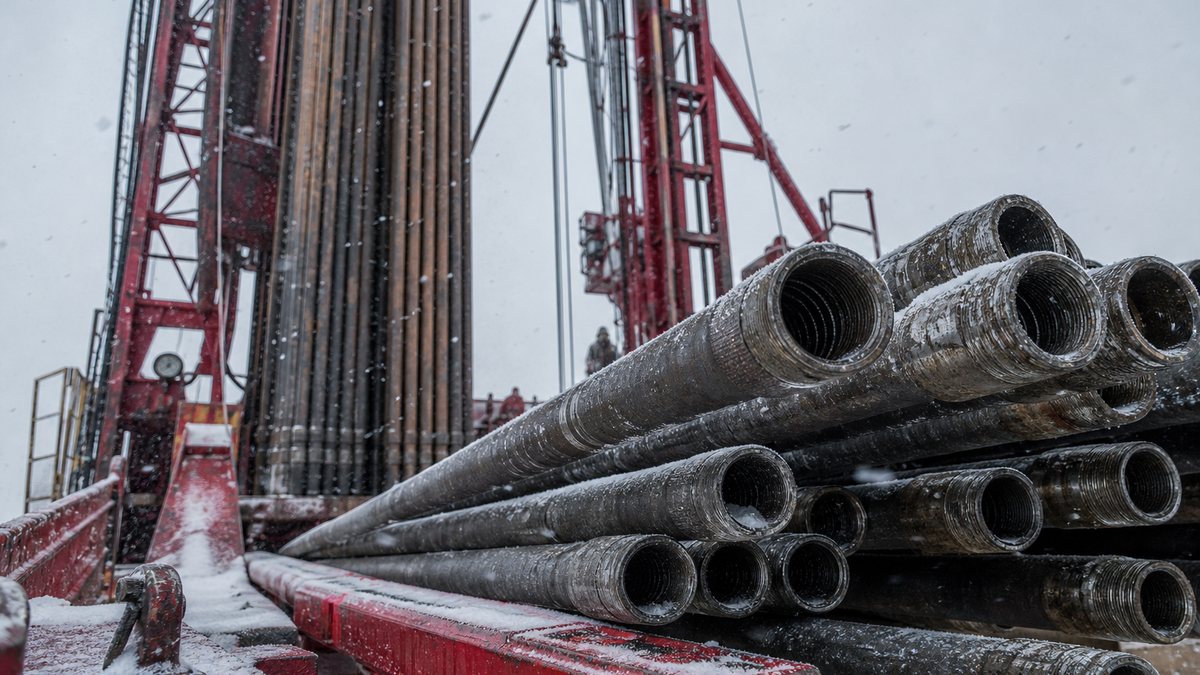
Are longer laterals why North Dakota produces more oil with fewer rigs?
They are a major reason. North Dakota produced 1,161,427 barrels per day in August 2026 from a record 20,177 producing wells, 5.6% above the state's revenue forecast (ND DMR, October 20, 2026). For most of 2026 the state did that with a rig count in the mid-20s (ND DMR, May 22, 2026), far below the rig counts of the early boom years.
The 2026 story has two parts. Early in the year, prices were weak: West Texas Intermediate closed at $59.19 in January, and Continental Resources founder Harold Hamm said the company would pause Bakken drilling for the first time in more than 30 years because "margins are basically gone" (Valley News Live, January 19, 2026). The DMR still expected production to stay roughly flat, because longer laterals and other efficiencies let operators hold output without adding rigs or frac crews (Budget Section, March 18, 2026).
Later in the year, prices rose sharply. The DMR's October briefing showed WTI spot near $98 and the August North Dakota market price at $76.14, both far above the $57 revenue forecast assumption. Rigs followed: the DMR listed 24 rigs in July and August, 28 in September and 31 in October, with a mid-month count of 34. KFYR reported in October that Chevron plans to drop from three rigs to two in December, which Anderson said "has everything to do with operational efficiencies," while other companies have added rigs and some operators are moving into areas outside the traditional core, including Burke, Divide, northern Williams, northern Billings and McKenzie counties (KFYR, October 15, 2026).
| Indicator | Figure | Source and date |
|---|---|---|
| Oil production, August 2026 | 1,161,427 bbl/d | ND DMR, Oct 20, 2026 |
| Producing wells, August 2026 | 20,177 (all-time high) | ND DMR, Oct 20, 2026 |
| ND rig count | 24 (Jul), 24 (Aug), 28 (Sep), 31 (Oct); 34 at mid-month count | ND DMR, Oct 20, 2026 |
| Frac crews | 8 (current, Oct 2026); 13 in May 2026 | ND DMR, Oct 20 and May 22, 2026 |
| Well completions | 74 (Jul), 96 (Aug), 105 (Sep) | ND DMR, Oct 20, 2026 |
| Total completed lateral footage | 10.67M ft (2024), 9.43M ft (2025), 7.07M ft (2026 YTD) | ND DMR, Oct 20, 2026 |
The footage line is worth a second look. Total completed footage fell from 2024 to 2025 even as the average well got longer, which means fewer wells were completed. Longer wells are an efficiency gain, not a substitute for activity: if footage keeps falling, production will eventually follow. That is why the late-2026 rise in rigs and completions matters as much as lateral length.
What are U-shaped wells, and why use them?
A U-shaped or horseshoe well drills one horizontal leg, turns 180 degrees underground and drills a second leg back alongside the first. The appeal is practical. Many Bakken tracts are only one or two sections wide in the direction a long well would need to go, and lease lines, existing wells or surface features can block a straight four-mile path. A U-shaped well can reach a similar amount of rock from one pad without needing a long straight spacing unit.
North Dakota had issued 54 U-shaped lateral permits by October 2026, with 19 completed, up from 32 permits in May (ND DMR). That is small next to more than 2,000 three- and four-mile permits, but it is growing, and other producing states are now discussing how to regulate U-shaped and J-shaped extended-reach laterals (Interstate Oil and Gas Compact Commission meeting materials, 2026). The tradeoffs are a harder drilling job through the turn and a less proven production history, so expect U-shaped wells to stay a tool for awkward acreage rather than a basin standard.
For mineral and surface owners, longer and U-shaped wells change the map. Larger spacing units pull more tracts into one well, which can bring royalty income to owners who were left out of earlier development, but it also makes the hearing, pooling and division-order process more complex. For surface owners, fewer and larger pads mean fewer locations, but more intense activity at each one: more trucks, more water, more sand and longer construction windows. Read every spacing notice carefully and get independent advice.
What do longer laterals mean for oilfield services and supply?
Longer wells do not shrink the oilfield. They change its shape. Based on what the DMR data and operator reports show, the effects fall into a few areas:
- Water. A four-mile frac uses far more water than a two-mile frac, delivered to one pad in a tight window, and then produces water for years. Water sourcing, transfer and handling become bigger, more concentrated jobs, the work we did through Bullrock Water.
- Fluids and waste. Longer drilling and completion operations generate more drilling fluids, cuttings and tank bottoms per well, and in some cases TENORM-bearing material that needs compliant disposal, the field Bullrock operated in.
- Pads and roads. Fewer but larger pads need more rock, gravel and scoria per location and well-built access roads to carry heavier, more frequent traffic. That is aggregate supply, the business of Kota.
- Equipment and parts. Longer, higher-pressure completions put more wear on pumps, valves, flanges and seals. Specialized parts and gaskets that hold up under those conditions are the niche of Raptor Supply and Raptor Gaskets.
- Midstream. Fewer well connections, but more volume per connection, and gassier production as wells age. Our article on North Dakota natural gas and the new pipelines covers why takeaway capacity now shapes drilling plans.
Longer wells also pair naturally with the next step in recovery. Fewer, longer wells with large drainage areas are the kind of assets that Crack the Code 2.0 is testing for enhanced oil recovery, because the state's goal is to get more oil from rock that has already been drilled.
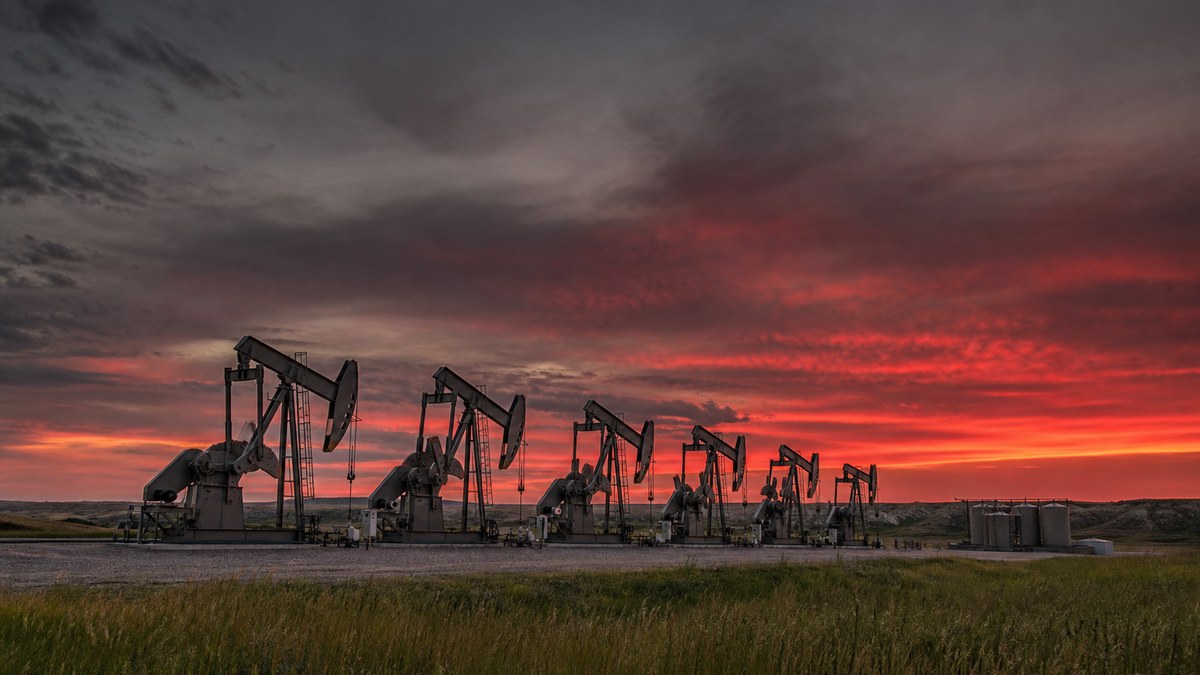
Planning drilling, land or service work around longer Bakken wells?
Raptor Energy Partners advises operators, landowners, developers and service companies on energy projects, land and partnerships in North Dakota, drawing on businesses we have built and operated in water, waste disposal, aggregate, equipment and gaskets. Tell us what you are working on.
Talk to Tom and BrettWho should pay attention to longer laterals?
Operators and producers
The economics favor three-mile wells now and are still being proven for four-mile wells. Spacing hearings, acreage swaps and unit consolidation are part of the work, and the DMR is handling an elevated hearing load. Planning around frac crew availability, water and takeaway matters more when a single pad carries more of the year's production.
Landowners and mineral owners
Expect more spacing applications for 1,920-acre and 2,560-acre units, and occasional U-shaped well proposals. Larger units can change your share of a well and the timing of royalty payments. This is general information, not legal advice; review spacing notices, pooling orders, leases and surface agreements with independent counsel.
Service companies and contractors
Activity is more concentrated: fewer pads, more work per pad, and bigger swings when a pad starts or finishes. Track completed footage and frac crews, not just rigs. Equipment that handles higher pressure and longer operating cycles is in demand.
Investors, family offices and developers
Longer laterals extend the life of Bakken inventory, which supports long-term demand for housing, infrastructure, power and services in western North Dakota, but output still depends on prices and reinvestment. Nothing here is investment advice or an offer of any security.
Status at a glance
| Item | Status | Source and date |
|---|---|---|
| Three-mile laterals | Mainstream: ~56% of recent permits; 1,576 permits issued to date | ND DMR, Oct 20, 2026 |
| Four-mile laterals | Scaling up: ~17% of recent permits; 435 permits, 108 completed | ND DMR, Oct 20, 2026 |
| U-shaped laterals | Early adoption: 54 permits, 19 completed | ND DMR, Oct 20, 2026 |
| Five-mile spacing | First case seen; wide adoption not expected without better economics | DMR testimony, Mar 18, 2026 |
| Chord Energy four-mile program | 26 four-mile wells executed by early Q3 2026; costs in line with expectations; long-term uplift still being evaluated | Chord Energy, Aug 5, 2026 |
| Chevron (Hess) Bakken | Moving to longer laterals; plans to go from 3 rigs to 2 in December 2026 | RBN Energy, May 2026; KFYR, Oct 15, 2026 |
Frequently asked questions
What is a lateral in a Bakken well?
The lateral is the horizontal section of the well that runs sideways through the oil-bearing Bakken or Three Forks rock and is hydraulically fractured. A two-mile lateral is about 10,000 feet long, a three-mile lateral about 15,000 feet and a four-mile lateral about 20,000 feet.
How long is the average Bakken lateral now?
The North Dakota Department of Mineral Resources reported an average completed lateral of 14,252 feet per well in the third quarter of 2026, an all-time high, pending additional data. The average was 10,554 feet in 2023 and 11,769 feet in 2025.
How many four-mile wells has North Dakota approved?
As of the October 20, 2026 Director's Cut, the state had issued 435 four-mile lateral permits, with 108 wells completed, along with 1,576 three-mile permits and 54 U-shaped lateral permits.
Why are oil companies drilling longer laterals?
A longer lateral spreads the fixed cost of the pad, the vertical section and the curve over more productive rock, lowering the cost per barrel. It also means fewer pads, roads and well connections, and it can make second-tier acreage economic.
Do three-mile wells produce more than two-mile wells?
Yes per well. Chord Energy reported in 2025 that on its western acreage three-mile wells delivered about 50 percent more estimated ultimate oil recovery than two-mile wells for about a 20 percent increase in cost.
What is a U-shaped or horseshoe well?
It is a well that drills one horizontal leg, turns 180 degrees underground and drills a second leg back toward the pad. It reaches a similar amount of rock as a long straight well where the shape of the acreage or lease lines would not allow one.
Is anyone drilling five-mile laterals in North Dakota?
The DMR director told lawmakers in March 2026 that he had seen the state's first five-mile spacing case, but did not expect large-scale adoption unless economics change significantly.
How many drilling rigs are working in North Dakota?
The DMR's October 20, 2026 briefing listed 24 rigs in July and August, 28 in September and 31 in October, with a mid-month count of 34, and 8 active frac crews.
Do longer laterals affect mineral owners?
Often. Longer wells usually require larger spacing units of 1,920 or 2,560 acres approved at Industrial Commission hearings, which can change which tracts share in a well and each owner's share. Owners should review spacing and pooling notices with independent counsel.
How can Raptor Energy Partners help?
We advise operators, landowners, developers and service companies on energy projects, land and partnerships in North Dakota, drawing on businesses we have built and operated in oilfield water, waste disposal, aggregate, equipment and gaskets. Email tom@raptorenergypartners.com or brett@raptorenergypartners.com.
Keep reading
Learn about the businesses we have built and operated and our current projects.
Sources
- North Dakota Department of Mineral Resources, Director's Cut, October 20, 2026 (August 2026 production, rigs, frac crews, permits, completions, lateral length and extended-reach permit counts).
- North Dakota Department of Mineral Resources, Director's Cut, May 22, 2026 (lateral length history 2020–Q1 2026, permit mix, extended-reach permits).
- KFYR-TV, Fewer rigs, more oil: North Dakota's Bakken production outlook (October 15, 2026).
- Citizen Portal summary of DMR testimony to the North Dakota Legislature Budget Section, DMR: Longer laterals and efficiency keep state production flat despite price swings (meeting of March 18, 2026).
- Chord Energy, Second quarter 2026 financial and operating results (August 5, 2026) and MarketBeat via Nasdaq, Chord Energy Q2 earnings call highlights (August 6, 2026).
- Hart Energy, Chord drills first 4-mile Bakken well (2025).
- RBN Energy, Q1 2026 earnings calls: Hess Midstream benefiting from longer Bakken laterals (May 2026).
- Valley News Live, Continental Resources halts Bakken drilling for first time in 30 years (January 19, 2026).
- Interstate Oil and Gas Compact Commission, Regulatory discussion on extended reach laterals: U-shaped, J-shaped (2026 meeting materials).
This article is general information about drilling trends, well design and regulation in North Dakota's Bakken, based on the sources listed and current as of October 30, 2026. Figures marked as pending can be revised, and well performance, costs and activity levels change. It is not investment, legal, tax or financial advice, and nothing here is an offer to sell or a solicitation to buy any security.