
Home › Bakken Insights › New Bakken projects
Bakken Projects · North Dakota
New Bakken projects in North Dakota: what's being built for 2026–2030
Pipelines, enhanced oil recovery, longer laterals and AI data centers. Here is what is actually moving in the Bakken right now, who is behind it, when it lands, and what it means for operators, landowners and service companies.
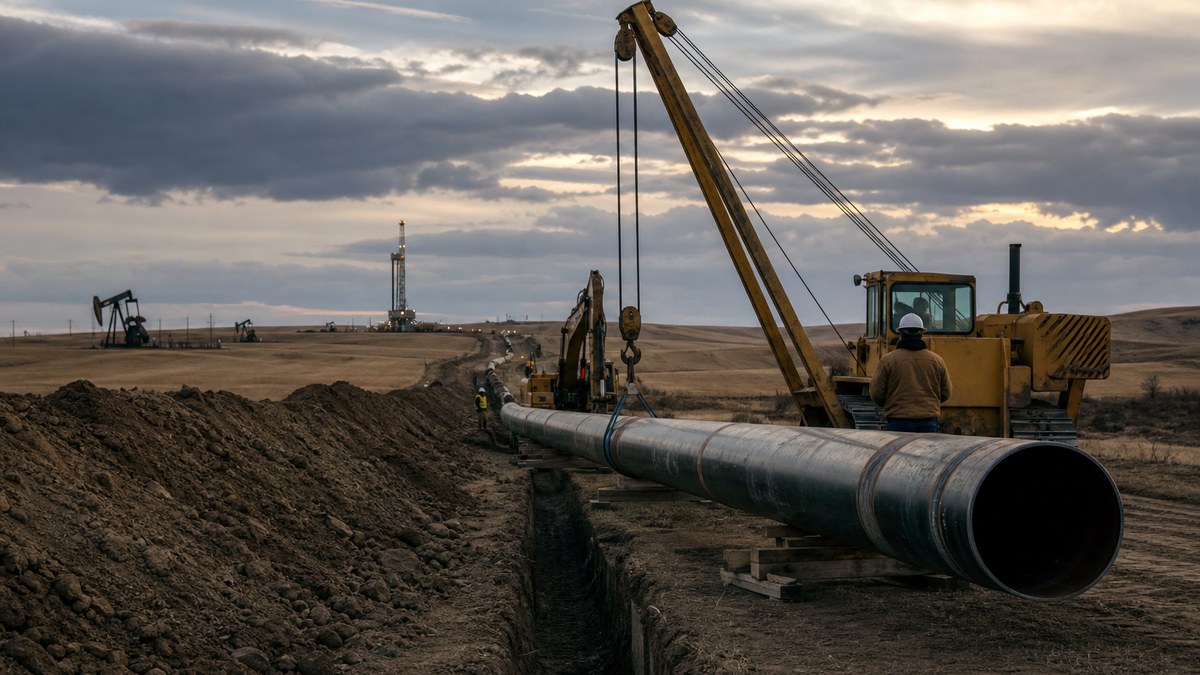
The biggest new Bakken projects in North Dakota are natural gas takeaway pipelines, led by WBI Energy's roughly $3 billion, 350-mile Bakken East line (final investment decision in September 2026, first phase targeted for late 2029); a $157 million enhanced oil recovery research program called Crack the Code 2.0; record-length horizontal wells; and AI data center campuses that are pulling new power and gas demand into the state.
- North Dakota produced 1,152,796 barrels of oil per day in June 2026, with 97.6% coming from the Bakken and Three Forks.
- The state reached an all-time high of 19,961 producing wells in June 2026.
- Bakken East: about 350 miles, $2.7–3.2 billion, initial capacity of 1.4 Bcf/d; Phase I late 2029, Phase II late 2030.
- Crack the Code 2.0: $157 million for six large-scale EOR pilots, with a second phase of up to 200 wells now being organized.
- Average completed lateral length hit a record 13,602 feet in Q2 2026.
For more than a decade the Bakken story was about drilling: how many rigs, how many frac crews, how fast production could climb. That story has changed. Production has settled into a high plateau of a little over 1.1 million barrels a day, and the most important new projects in North Dakota are now about what surrounds the wellhead: moving natural gas, squeezing more oil from existing wells, and turning the state's energy into power for new industries.
At Raptor Energy Partners we have built and operated businesses in this patch, from oilfield waste disposal and water management to aggregate supply and industrial parts. We follow these projects because they decide where the next decade of work, capital and land value in western North Dakota will go. This guide pulls together the projects that matter most, using data from the state's Department of Mineral Resources and the companies involved.
Where does Bakken production stand in 2026?
North Dakota is still the third-largest oil-producing state, behind Texas and New Mexico. According to the North Dakota Department of Mineral Resources (DMR), the state produced an average of 1,152,796 barrels per day in June 2026, up 2.45% from May and slightly above the state's revenue forecast of 1.15 million barrels per day. The Bakken and Three Forks formations supplied 1,125,657 barrels per day, or 97.6% of the total.
Natural gas is growing faster than oil. Gas production reached 3.583 billion cubic feet per day in June, and the state captured 95.5% of the gas it produced, well above its 91% capture goal. That gas is the key to several of the new projects below.
The year has not been smooth. In January 2026, with oil near $60, Continental Resources founder Harold Hamm said the company would pause new drilling in North Dakota for the first time in 30 years, while continuing to produce from existing wells. The DMR's director said breakeven prices for North Dakota operators range from roughly $50 to $65 per barrel of WTI depending on location. Prices then swung sharply: the North Dakota market price averaged $57.74 in February, $84.33 in March and $100.64 in May before easing to $80.56 in June.
| Indicator (DMR) | Latest figure | Why it matters |
|---|---|---|
| Oil production | 1,152,796 bbl/d (June 2026) | A stable, high plateau rather than a boom or a bust |
| Gas production | 3.583 Bcf/d (June 2026) | Rising gas volumes drive the pipeline buildout |
| Producing wells | 19,961 (all-time high) | More wells to maintain, service and eventually re-stimulate |
| Gas capture | 95.5% statewide | Takeaway capacity has to keep pace to keep flaring low |
| Permits / completions | 93 permits, 74 completions (July 2026) | Activity picked up as prices recovered |
| Rigs (mid-August 2026) | 33–34 rigs, 8 frac crews | Up from the winter pause |
What is the Bakken East pipeline?
Bakken East is the most important new energy infrastructure project in North Dakota. Developed by WBI Energy, a subsidiary of Bismarck-based MDU Resources, it is a high-pressure natural gas pipeline of about 350 miles from the Bakken in western North Dakota to the Fargo area in the east. MDU announced a positive final investment decision on September 30, 2026, after WBI secured customer commitments.
- Cost: an estimated $2.7 billion to $3.2 billion.
- Capacity: an initial design of 1.4 billion cubic feet per day, expandable as demand grows.
- Phase I: the Bakken (Watford City area) to central North Dakota near Bismarck, targeted for late 2029.
- Phase II: extension to an existing WBI compressor station near Mapleton, west of Fargo, targeted for late 2030.
- Construction: across the 2028–2030 seasons, with work at three existing compressor stations and four new ones.
- Next step: WBI expects to file with the Federal Energy Regulatory Commission in the fourth quarter of 2026. FERC will have full authority over siting.
The State of North Dakota has put real weight behind it. In August 2025 the North Dakota Industrial Commission voted unanimously to support the project with a firm capacity commitment of $50 million per year for 10 years. Justin Kringstad, director of the North Dakota Pipeline Authority, has described it as the first direct, large-scale link between western North Dakota gas production and demand in the central and eastern parts of the state.
What other gas pipelines are planned in North Dakota?
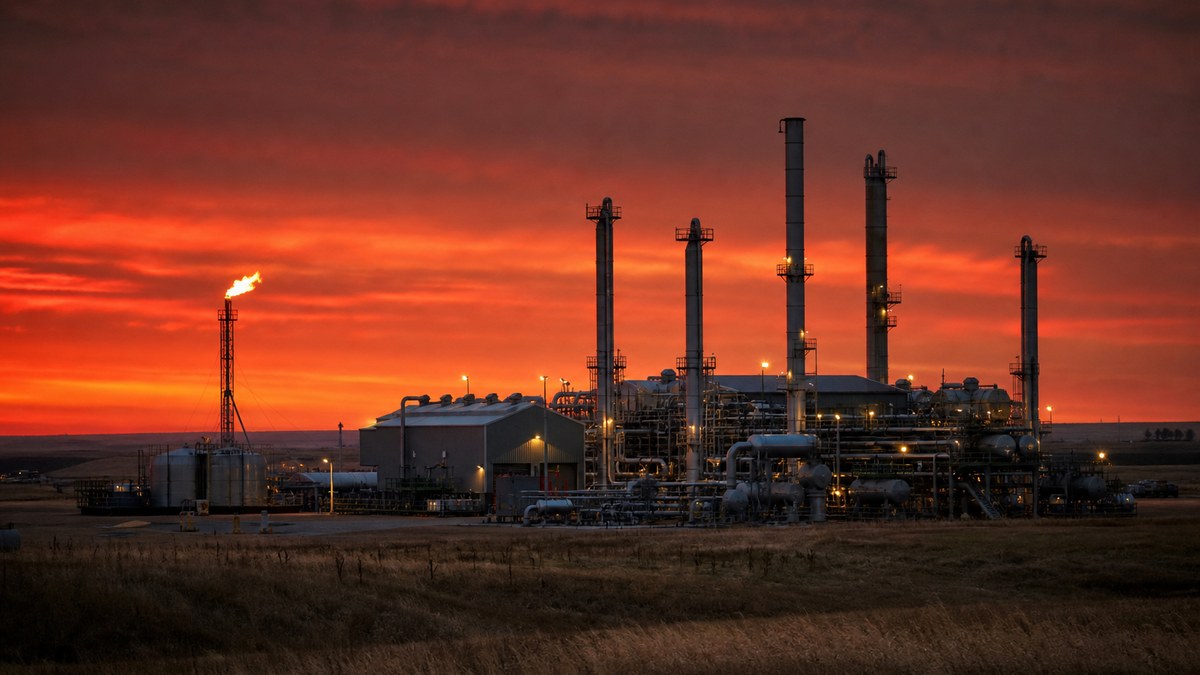
Bakken East is not the only line in development. A second project from Intensity Infrastructure Partners and Rainbow Energy Center is planned in two phases totaling 344 miles:
- Phase I: 136 miles of 36-inch pipe from near Watford City to Washburn, about 1.1 million dekatherms per day, targeted for early 2029. Uncommitted capacity is expected to support gas-fired power generation along the corridor and at Coal Creek Station.
- Phase II: 208 miles of 30-inch pipe from Washburn to Casselton, about 430,000 dekatherms per day, with multiple delivery points.
The developers said in January 2026 that executed precedent agreements give Phase I sufficient backing to advance. Closer in, the Bakken xPress project from TC Energy and Kinder Morgan adds about 300,000 dekatherms per day of capacity; the DMR reported in August 2026 that its May 2026 in-service target had been delayed.
Gas takeaway is the single biggest constraint on Bakken activity. Operators will not let flaring climb back to old levels, so every new well now depends on somewhere for its gas to go. The pipelines above are what allow drilling to continue into the 2030s, and the construction itself will run for three seasons across the state. Contractors, landowners along the routes and suppliers of aggregate, water and site services should be planning for 2028 now, not in 2028.
What is Crack the Code 2.0?
Crack the Code 2.0 is North Dakota's push to make enhanced oil recovery (EOR) work in the Bakken at commercial scale. Today's horizontal wells recover only a small share of the oil in place. Governor Kelly Armstrong has said that only about 15% of the Bakken and Three Forks has been tapped. EOR typically injects natural gas or carbon dioxide back into the reservoir to re-pressurize it and push out more oil.
The program was announced in May 2026 and is coordinated by the Energy & Environmental Research Center (EERC) at the University of North Dakota:
- Phase one: $157 million, made up of $36 million from the U.S. Department of Energy, $45 million from the State of North Dakota and about $76 million from industry, for six large-scale pilots. Each pilot runs 10 to 20 times the duration and injection volume of earlier tests. As of October 2026, three are underway, one has its injection permit and two await Industrial Commission approval.
- Phase two: announced October 16, 2026, it aims to move from individual wells to field-scale testing on up to 200 wells, near a CO2 source such as the Dakota Gasification Company and existing pipelines. The estimated cost is about $400 million, and Sen. John Hoeven is working with the Department of Energy on loan guarantee authority to fund it. A request for state funding is expected in the next legislative session.
The stakes are large. Chord Energy CEO Danny Brown has cited a potential of 10 billion additional barrels, and supporters say EOR could double recoverable oil in North Dakota. Timing is tied to federal tax credits: Hoeven has said the technology needs to be in widespread use by the early 2030s to benefit from the 45Q credit for carbon dioxide used in EOR.
If EOR works at field scale, it changes the Bakken from a drilling story into a long-life production story, and it changes the value of every producing well and acreage position in the basin. It also brings a different kind of work: gas compression, injection infrastructure, monitoring and long-term field management. We would watch the pilot results expected from 2027 closely before pricing assets as if EOR is a sure thing, but the direction is clear.
How long are Bakken wells getting?
Longer laterals are one of the quiet reasons the Bakken has held its production plateau. The DMR reports that the average completed lateral length rose from 10,141 feet in 2022 to 11,768 feet in 2025, and reached a record 13,602 feet in the second quarter of 2026. As of August 2026 the state had issued permits for 1,485 three-mile wells, 374 four-mile wells (81 completed) and 48 U-shaped wells. The DMR also notes that the time from spud to stimulation and from stimulation to first production keeps shrinking.
Longer wells mean more rock contacted per pad, fewer surface locations and lower cost per barrel. They also mean larger water, sand and logistics needs per well, and a premium on service companies that can handle bigger jobs efficiently.
Why are AI data centers coming to North Dakota?
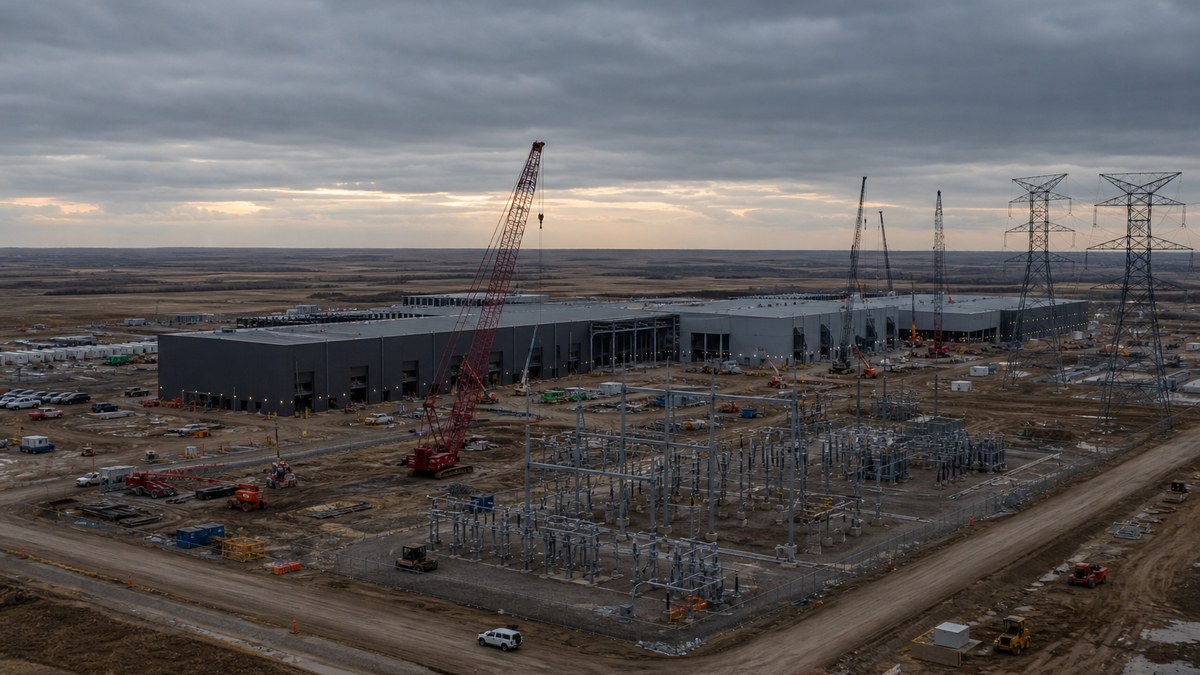
Cheap power, cold weather and available land have made North Dakota a target for AI data centers, and that ties directly back to Bakken gas and the state's power grid. Applied Digital is the largest example:
- Ellendale (Polaris Forge 1): an operating campus.
- Harwood (Polaris Forge 2): a 280-megawatt AI facility near Fargo, leased to Oracle and under construction, funded in part by a $2.15 billion bond offering in March 2026. The North Dakota Public Service Commission approved a $110 million power project, including a new substation and transmission line, in April 2026.
- Oliver County: a planned "AI Factory" south of Hanover, with about 200 permanent jobs and about 1,000 construction jobs expected, subject to county rezoning.
This is one reason pipeline developers are designing for power generation and industrial customers in central and eastern North Dakota, not just for exporting gas out of the state.
Working on a project in the Bakken?
Raptor Energy Partners advises operators, landowners, family offices and investors on energy operations, land and infrastructure in North Dakota. We have built and run businesses in the field. Tell us what you are working on.
Start a conversationWho is consolidating the Bakken?
The Bakken's operator base has consolidated into fewer, larger companies over the past few years. In 2024 Chord Energy combined with Enerplus in a deal Wood Mackenzie valued at about $3.8 billion, and Devon Energy agreed to buy Williston Basin assets from Grayson Mill Energy in a deal reported at about $5 billion. Larger operators tend to drill longer laterals, run fewer but more efficient rigs and plan around multi-year infrastructure, which fits the projects described above. Smaller and private operators were among the first to slow drilling when prices fell in early 2026, according to the North Dakota Petroleum Council.
What do these projects mean for operators, landowners and service companies?
For operators
Gas takeaway sets the pace. Projects with firm capacity on new pipelines will be able to drill gassier acreage without flaring penalties. EOR pilots are worth following closely because they could change the value of mature wells.
For landowners and mineral owners
Pipeline routes, compressor stations and data center sites create easement, surface use and lease opportunities across the state, not just in the west. Mineral owners in mature areas could benefit if EOR extends well life.
For service and supply companies
Three construction seasons of pipeline work, larger completions and new industrial sites mean sustained demand for aggregate, water, waste handling, equipment and parts. This is the part of the economy we know from experience at Bullrock, Bullrock Water, Kota, Raptor Supply and Raptor Gaskets.
For investors and family offices
The opportunity is shifting from pure drilling exposure toward infrastructure, services and land tied to long-term projects with state backing. Timelines are long and regulatory steps, especially FERC approval, still lie ahead, so structure and patience matter.
| Project | Developer | Status (Oct 2026) | Target |
|---|---|---|---|
| Bakken East gas pipeline (~350 mi, 1.4 Bcf/d) | WBI Energy (MDU Resources) | Final investment decision; FERC filing expected Q4 2026 | Phase I late 2029; Phase II late 2030 |
| Watford City–Washburn–Casselton gas pipeline (344 mi) | Intensity Infrastructure Partners & Rainbow Energy Center | Phase I backed by precedent agreements | Phase I early 2029 |
| Bakken xPress (300,000 Dth/d) | TC Energy & Kinder Morgan | In-service delayed | Was May 2026 |
| Crack the Code 2.0 EOR, phase one ($157M) | EERC, State of ND, DOE, industry | 3 of 6 pilots underway | Early results from 2027 |
| Crack the Code 2.0 EOR, phase two (up to 200 wells) | State, Sen. Hoeven, NDPC, industry | Seeking ~$400M via DOE loan guarantees | Not yet set |
| Harwood AI data center (280 MW) | Applied Digital (leased to Oracle) | Under construction | Not stated |
Frequently asked questions
What new oil and gas projects are planned in North Dakota?
The largest are natural gas pipelines: WBI Energy's Bakken East (about 350 miles, $2.7–3.2 billion) and a 344-mile line from Intensity Infrastructure Partners and Rainbow Energy Center. Alongside them are the Crack the Code 2.0 enhanced oil recovery pilots and new data center and power projects.
How much oil does North Dakota produce?
North Dakota produced 1,152,796 barrels per day in June 2026, according to the state's Department of Mineral Resources. About 97.6% came from the Bakken and Three Forks formations.
When will the Bakken East pipeline be finished?
Phase I, from the Bakken to central North Dakota, is targeted for late 2029, and Phase II, to near Mapleton west of Fargo, for late 2030. The project still needs FERC approval; WBI expects to file in the fourth quarter of 2026.
What is enhanced oil recovery in the Bakken?
Enhanced oil recovery injects natural gas or carbon dioxide into the reservoir to re-pressurize it and recover more oil from existing wells. North Dakota's Crack the Code 2.0 program is testing it at large scale, with six pilots in phase one and up to 200 wells planned for phase two.
Is the Bakken still growing?
Oil production has held near 1.1–1.15 million barrels per day, below the boom-era peak of about 1.5 million, while gas production and well counts keep rising. Growth now depends mainly on gas takeaway, longer laterals and whether enhanced oil recovery succeeds.
Why did drilling slow in the Bakken in early 2026?
Oil prices fell to around $60 in January 2026, close to or below breakeven for many wells. Continental Resources paused new drilling in the state, and other operators cut rigs. Activity picked up again as prices rose in the spring.
Why are data centers being built in North Dakota?
Available power, land and a cold climate attract AI data centers. Applied Digital operates a campus in Ellendale, is building a 280-megawatt facility in Harwood leased to Oracle, and plans a third site in Oliver County.
How long are Bakken horizontal wells?
The average completed lateral reached a record 13,602 feet in Q2 2026. North Dakota has permitted 1,485 three-mile wells, 374 four-mile wells and 48 U-shaped wells as of August 2026.
How can Raptor Energy Partners help with a Bakken project?
We advise operators, landowners, developers, family offices and investors on energy operations, land, infrastructure and partnerships, drawing on businesses we have built and operated in oilfield services and supply. Email tom@raptorenergypartners.com or brett@raptorenergypartners.com.
Keep reading
Sources
- North Dakota Department of Mineral Resources, Director's Cut, August 20, 2026 (June 2026 production, wells, rigs, gas capture, laterals, pipeline updates) and May 22, 2026.
- Pipeline & Gas Journal, WBI Energy approves $3 billion, 350-mile Bakken East pipeline (September 2026).
- Prairie Public, WBI makes final investment decision on the Bakken East project (October 3, 2026).
- Pipeline & Gas Journal, Phase I of 344-mile North Dakota gas pipeline advances with firm commitments (January 2026).
- Office of Sen. John Hoeven, Efforts begin on phase 2 of Crack the Code 2.0 (October 16, 2026).
- North Dakota Monitor, North Dakota officials are jumpstarting next phase of effort to boost Bakken oil production (October 16, 2026) and Continental Resources to stop drilling in North Dakota for now (January 20, 2026).
- KFGO, $157 million effort to raise North Dakota oil production (May 8, 2026).
- Oilprice.com, North Dakota chases a second Bakken boom through enhanced recovery (June 2026).
- Valley News Live, Applied Digital expands in North Dakota, eyes Oliver County for third data center (July 13, 2026).
- Wood Mackenzie, Enerplus merges with Chord in US$3.8 billion deal; Bloomberg, Devon Energy to buy Williston Basin assets in $5 billion deal (2024).
This article is general information about public energy projects in North Dakota, based on the sources listed and current as of October 2026. Project costs, capacities and dates can change. It is not investment, legal or financial advice, and nothing here is an offer to sell or a solicitation to buy any security.