
Home › Bakken Insights › North Dakota natural gas
Pipelines & Midstream · North Dakota
Natural gas in North Dakota: flaring, gas capture and the new pipelines to move it
The Bakken is producing more natural gas than ever, about 3.6 billion cubic feet a day, and capturing about 96% of it. Here is where that gas goes today, why flaring is still a live issue, and what Bakken xPress, Bakken East and the Intensity pipeline change between now and 2030.
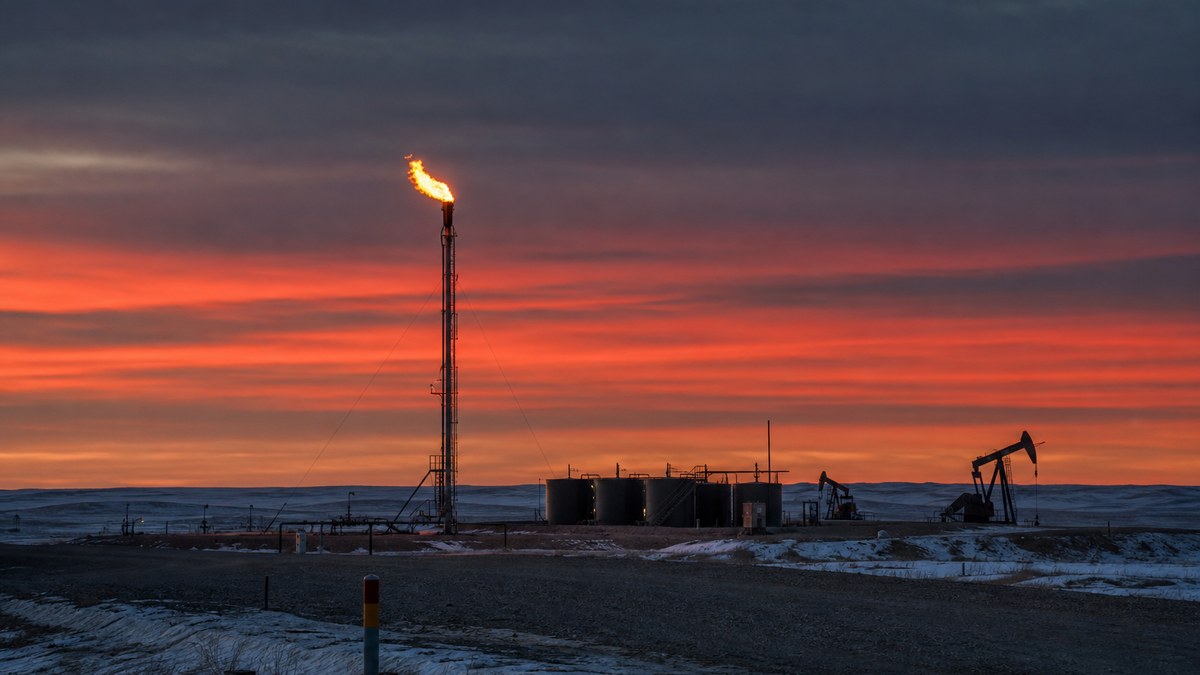
North Dakota produced 3.633 billion cubic feet of natural gas per day in August 2026 and captured 95.8% of it, flaring about 155 million cubic feet a day (ND DMR). Gas output keeps rising faster than oil, so new takeaway matters: Bakken xPress is built but not yet flowing south, Bakken East reached a final investment decision on September 30, 2026, and the Intensity line is proceeding with phase one.
- Gas production: 3.633 Bcf/d in August 2026, up from 3.622 Bcf/d in July and above the 3.58 Bcf/d June record reported in August (ND DMR; Minot Daily News).
- Gas capture: 95.8% statewide and 96.1% in the Bakken in August 2026, against a state goal of 91% in place since November 1, 2020 (ND DMR, Director's Cut Oct 20, 2026).
- Flaring: 155.4 million cubic feet per day in August 2026, down 17.9 MMcf/d from July.
- Bakken xPress: 300,000 Dth/d, about $555 million. The Northern Border work is complete, but as of late August 2026 no gas had flowed south on Bison because of a lease and interconnect dispute (East Daley). DMR lists the project as delayed.
- Bakken East (WBI Energy): final investment decision September 30, 2026; about 350 miles, 1.4 Bcf/d initial design, $2.7–3.2 billion; phase one late 2029, phase two late 2030.
- Intensity / Rainbow pipeline: phase one (136 miles, 36-inch, about 1.1 million Dth/d, Watford City area to Washburn) proceeding on binding commitments; targeted 2029.
For most of the Bakken's history, the story was oil. Natural gas was the byproduct: it came out of the same wells, it had to go somewhere, and when pipelines and processing plants could not keep up, it went into a flare. In the early 2010s flaring rates were far higher than today, and the night sky over McKenzie and Mountrail counties was famous for it.
That picture has changed. The state now captures about 96% of the gas it produces, and the conversation has shifted from "how do we stop burning it" to "how do we move and use all of it." The reason is simple: the Bakken is getting gassier. Every year a larger share of what comes out of a typical well is natural gas, and statewide gas production keeps setting records even when oil output is flat.
In our overview of new Bakken projects we named natural gas takeaway as one of the themes that will shape North Dakota through 2030, and we covered the largest single project in depth in Bakken East pipeline explained. This article steps back and looks at the whole gas system: production, flaring rules, where the gas goes today, and the three pipeline projects that change the map.
How much natural gas does North Dakota produce?
About 3.6 billion cubic feet per day. The North Dakota Department of Mineral Resources (DMR) reported in its October 20, 2026 Director's Cut that gas production was 3.633 Bcf/d in August 2026, or 112.6 Bcf for the month, up from 3.622 Bcf/d in July. In August, the Pipeline Authority's Justin Kringstad had called June's 3.58 Bcf/d "a new record for natural gas production in North Dakota" (Minot Daily News, August 25, 2026), and the July and August figures were higher still.
Oil production rose much more slowly over the same period: 1,158,660 barrels per day in July and 1,161,427 bbl/d in August, an increase of 0.24% (ND DMR). That gap is the key trend in the basin.
| Indicator | Figure | Source and date |
|---|---|---|
| Gas production, August 2026 | 3.633 Bcf/d (112.6 Bcf/month) | ND DMR, Oct 20, 2026 |
| Gas production, July 2026 | 3.622 Bcf/d | ND DMR, Oct 20, 2026 |
| Gas production, June 2026 (reported as a record) | 3.58 Bcf/d | Minot Daily News, Aug 25, 2026 |
| Oil production, August 2026 | 1,161,427 bbl/d | ND DMR, Oct 20, 2026 |
| Implied gas-to-oil ratio, August 2026 | About 3.13 Mcf per barrel (our calculation from DMR figures) | Raptor calculation, Oct 2026 |
| Previous reported GOR high | 3.03 Mcf/bbl (July 2025) | NGI citing ND Pipeline Authority, Sept 29, 2025 |
| Producing wells, August 2026 | 20,177 (all-time high) | ND DMR, Oct 20, 2026 |
Why is the Bakken getting gassier?
Two reasons, both structural. First, wells produce a higher share of gas as they age and reservoir pressure falls, and North Dakota now has more than 20,000 producing wells, many of them years into their decline. Second, as the best core acreage is drilled out, operators are moving into areas that are naturally gassier. NGI reported in 2024 that the state's gas-to-oil ratio had hit a record as producers moved into "second- and third-tier" Bakken areas, and in September 2025 it reported a new high of 3.03 Mcf per barrel for July 2025, with Kringstad expecting GORs to keep rising "for many more years to come."
Using DMR's August 2026 figures, the implied statewide ratio is now about 3.13 Mcf per barrel. That is our own arithmetic (3.633 Bcf/d divided by 1.161 million bbl/d), not an official DMR statistic, but it points the same way: each new barrel of Bakken oil now arrives with more gas attached than the barrel before it.
The practical consequence is that oil growth in North Dakota now depends on gas infrastructure. As Gov. Kelly Armstrong put it when the Industrial Commission backed Bakken East in 2025: "If we can't move our gas, we can't increase oil production or maintain oil production" (North Dakota Monitor, August 21, 2025).
How much gas is still flared in North Dakota?
About 155 million cubic feet per day. The DMR reported statewide flaring of 155.4 MMcf/d in August 2026, down 17.9 MMcf/d from July, with statewide capture of 95.8% and Bakken capture of 96.1%. In June 2026, flaring was 162.5 MMcf/d and capture about 95.5% (Minot Daily News). Prairie Public, reporting on the same October briefing, rounded capture to 96%.
Put in perspective, 155 MMcf/d is roughly 4% of production. It is a small share, but it is not a small volume: it is about half the capacity of the entire Bakken xPress project. The goal is not zero in the short term; it is to keep capture high while total production grows.
| Month (2026) | Statewide gas capture | Gas flared | Source |
|---|---|---|---|
| June | About 95.5% (Bakken 95.7%) | 162.5 MMcf/d | Minot Daily News, Aug 25, 2026 |
| July | Below August (exact figure not stated) | About 173 MMcf/d (derived: August plus 17.9) | ND DMR, Oct 20, 2026 |
| August | 95.8% (Bakken 96.1%) | 155.4 MMcf/d | ND DMR, Oct 20, 2026 |
| State goal | 91% (since Nov 1, 2020) | — | ND DMR |
What are North Dakota's flaring rules?
The framework is the North Dakota Industrial Commission's Order No. 24665, adopted March 3, 2014 and effective June 25, 2014 (U.S. Department of Energy summary). Its main tools are:
- Gas capture plans. Operators file a plan with each drilling permit application showing the gathering system and processing plant the well will connect to, the expected flowback rate and duration, current system capacity and a timeline for connection, with an affidavit that the midstream company received the plan.
- Capture goals. The goals stepped up over time; the current goal is 91% capture, in place since November 1, 2020 (ND DMR). Statewide performance has been above that goal throughout 2026.
- Flexibility added in 2018. The April 2018 amendments let operators outside the core accumulate capture credits over six months, gave credit for gas used in state for equipment and facilities, and let companies that meet targets skip the capture plan. The November 2018 changes shifted the policy from cutting flared volume to increasing captured volume and added a goal of encouraging investment.
- No venting. Venting is banned: casinghead gas that is not captured must be burned in a working flare.
Rules are only half of it. The other half is commercial pressure. Kringstad told the 2026 Williston Basin Petroleum Conference: "Today's producers will not allow flaring to ramp up to the levels it was years ago," adding that if producers lack a solution, they may shift capital elsewhere (KFYR, May 21, 2026). In other words, if gas cannot move, drilling slows rather than flaring rising.
The 91% goal is not the constraint anymore; operators are well above it. The real constraint is that capture depends on every link in the chain having room on the same day: the gathering line, the compressor, the processing plant and the long-haul pipe. When one is full, the newest wells wait or flare. For landowners and service companies, that means gas infrastructure is now the leading indicator for drilling activity in a given township, not just the rig count. If you want to know where activity is heading, watch where gathering lines and compression are being added.
Where does Bakken natural gas go today?
Most of it leaves the state. After processing, the dry gas (mostly methane) moves on interstate pipelines and the natural gas liquids are shipped separately. According to Kringstad's estimates reported by NGI in September 2025:
- Chicago and the Midwest: about 80–85% of Bakken volumes.
- Local use in North Dakota and eastern Montana: about 5–10%.
- The Rocky Mountain region: about 5%.
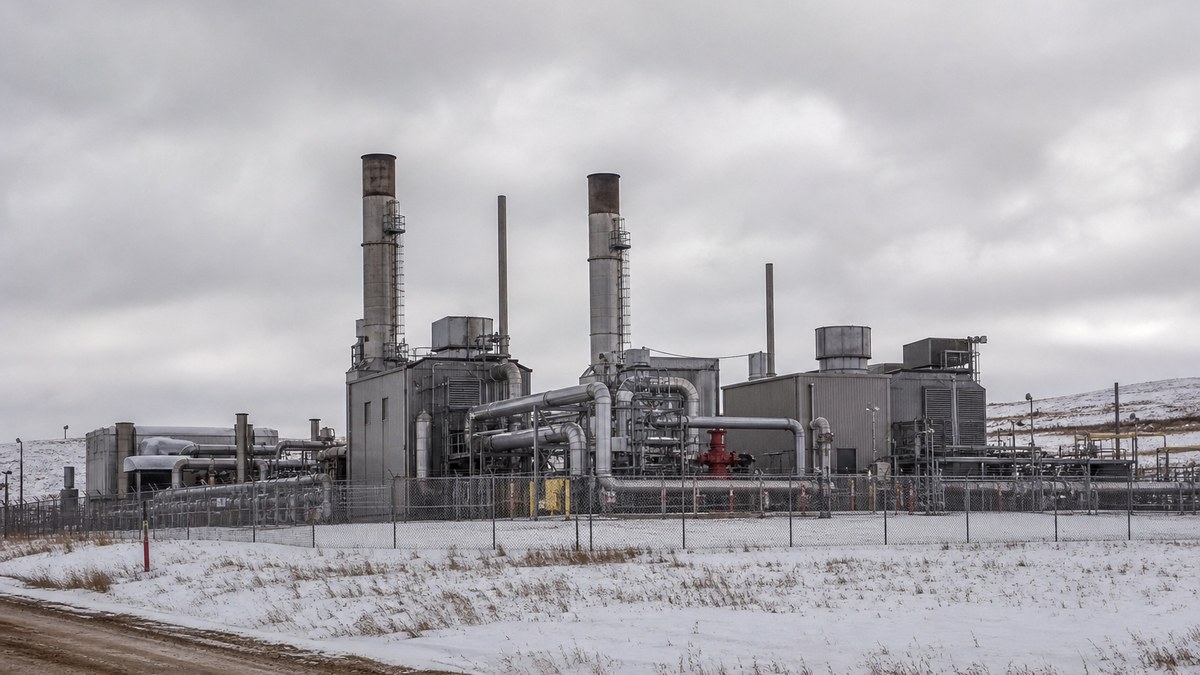
The main routes are Northern Border, which carries dry gas to the Midwest and in recent months has carried mostly Bakken gas (about 85% of its volumes, with the rest from Canada), and Alliance, which carries liquids-rich gas to the Chicago area. WBI Energy's system serves in-state and regional demand. Kringstad has said he is "still forecasting congestion" on Northern Border over the long term (NGI, September 2025).
The heavy reliance on Midwest routes is why the next wave of projects matters. Bakken xPress adds a path south to the Rockies, and Bakken East and the Intensity line would, for the first time, build large-scale pipe to move Bakken gas east across North Dakota itself, toward power plants, industrial users and data centers.
What is Bakken xPress, and why isn't it flowing yet?
Bakken xPress is a joint TC Energy and Kinder Morgan project to send about 300,000 dekatherms per day (roughly 300 million cubic feet per day) of Bakken gas south to the Cheyenne hub in the Rockies. It has two parts that are often named separately:
- Bison XPress (TC Energy's Northern Border Pipeline Company): upgrades three Northern Border compressor stations and reverses the idled 302-mile, 30-inch Bison pipeline, originally built to carry Powder River Basin gas east. FERC certificated it in October 2024 and construction started in April 2025. The work included two 31,900-horsepower gas-fired turbine compressors at the Manning compressor station in Dunn County.
- Bakken Xpress on the Kinder Morgan side: Wyoming Interstate Co. (WIC) leases the capacity on Northern Border, Bison and Fort Union Gas Gathering to move gas to Cheyenne. Hess and ONEOK Rockies Midstream signed as shippers in the 2023 open season (NGI, October 2024).
The North Dakota Pipeline Authority puts the total cost at about $555 million and the original target in-service date at May 2026. On paper, the project is largely done: TC Energy said on its second-quarter 2026 earnings call that Northern Border construction was complete and placed in service, adding 300 MMcf/d of Bakken egress capacity. In practice, East Daley Analytics reported on August 28, 2026 that the Bison pipeline had not yet flowed any southbound volumes. WIC said in a May 18 filing that it had not accepted the leased capacity because Bison is not authorized to deliver gas into the Fort Union system, so the seamless path across all three systems is not complete. DMR's October 20, 2026 Director's Cut still marks the May 2026 in-service date as delayed.
This is the project behind the search phrase "Bakken xPress." Its status, as of late October 2026, is best described as built, but awaiting regulatory and commercial resolution before full flows. When it does flow, it will be the first new long-haul outlet for Bakken gas in years, and it arrives at a time of record production.
What will Bakken East and the Intensity pipeline add?
Both projects aim to do something new: move large volumes of Bakken gas east across North Dakota, rather than out of state, to serve power generation, industry and communities along the route.
| Project | Route and size | Capacity | Cost | Status and timing |
|---|---|---|---|---|
| Bakken xPress (TC Energy / Kinder Morgan) | Northern Border compression upgrades + reversed 302-mile Bison line to Wyoming | 300,000 Dth/d | About $555M (NDPA) | Built; Northern Border portion in service; southbound flows not started as of Aug 2026; listed as delayed (DMR, Oct 2026) |
| Bakken East (WBI Energy / MDU Resources) | About 350 miles, Bakken to near Fargo (Mapleton) | 1.4 Bcf/d initial design | $2.7–3.2B | Final investment decision Sept 30, 2026; construction 2028–2030; phase one late 2029, phase two late 2030 |
| Intensity Infrastructure / Rainbow Energy Center, phase one | 136 miles, 36-inch, Watford City area to Washburn | About 1.1 million Dth/d | Not disclosed | Proceeding on binding precedent agreements (Jan 2026); targeted 2029 |
| Intensity, phase two | 208 miles, 30-inch, Washburn to Casselton | 430,000 Dth/d | Not disclosed | Proposed; NDPA lists a January 2030 target |
Bakken East is the state-backed project. The North Dakota Industrial Commission voted in August 2025 to support it with a 10-year firm capacity commitment of about $50 million per year, up to $500 million in total, with the plan to transfer that capacity to private shippers over time (North Dakota Monitor). A binding open season in early 2026 drew about 1.4 Bcf/d of interest (Pipeline & Gas Journal, May 2026), and MDU's board approved the final investment decision on September 30, 2026. The plan calls for four new compressor stations and changes at three existing ones. We cover the route, landowner questions and timeline in our Bakken East explainer.
The Intensity line is the privately backed alternative. Intensity Infrastructure Partners and Rainbow Energy Center, owner of Coal Creek Station near Underwood, said in January 2026 that they would proceed with phase one based on binding commitments. The line would take gas from Northern Border, WBI's system and six Bakken processing plants, and uncommitted capacity is intended for new gas-fired power along the route and at Coal Creek (Offshore Technology via Yahoo Finance, January 7, 2026). Cost and shippers have not been disclosed.
If both are built as planned, North Dakota would add well over 2 Bcf/d of new in-state pipeline capacity by 2030, on top of Bakken xPress. That is a large number relative to today's 3.6 Bcf/d of production, which is why these projects are also being pitched as the backbone for new power plants and data centers in central and eastern North Dakota.
The timeline is the story. Production is rising now, Bakken xPress is stuck in a lease dispute, and the two big in-state lines are not expected until 2029–2030. That leaves a three-year window in which gathering, compression and processing on existing systems carry the load. Expect operators and midstream companies to keep spending on field compression, gathering loops and plant debottlenecking in that window, and expect on-site uses for gas (power generation, field fuel, reinjection for enhanced oil recovery) to keep growing. Then, from 2028, two large pipeline construction programs overlapping in the same state will compete for crews, pipe yards, aggregate, water and equipment.
What else is being done with Bakken gas?
Pipelines are not the only outlet. Three other uses are growing:
- Enhanced oil recovery. Phase one of Crack the Code 2.0 uses produced gas from existing operations as the injectant in its pilots, because large CO2 supplies will take years. Gas reinjected for EOR is gas that is neither flared nor shipped.
- Power generation. The Intensity project explicitly plans to use uncommitted capacity for gas-fired power at Coal Creek and along its route, and MDU cites data center growth in its service territory as part of long-term demand for Bakken East (Pipeline & Gas Journal, May 2026).
- Power at the wellhead. Some operators route gas that would otherwise be flared to on-site generators. Energies Media (October 26, 2026) described one company running mobile data centers on Bakken flare gas at well pads. These are small volumes relative to statewide production, but they show the economics: gas worth little at a constrained wellhead can be worth more as electricity on site.
Pricing is part of the backdrop. There is no liquid Bakken-specific gas price index; producers often cite Northern Border Ventura as a proxy (NGI). When regional pipelines are full, that price can be weak, which strengthens the case for both new pipe and local uses.
What does this mean for oilfield service and construction companies?
Gas infrastructure creates a different kind of demand from drilling. Based on the projects above, the work falls into a few categories:
- Compression and gas handling. Field compression, station upgrades and new compressor stations (Bakken East alone plans four new stations). This is high-pressure equipment where seals, gaskets, flanges and specialized parts matter, the niche our team knows from Raptor Supply and Raptor Gaskets.
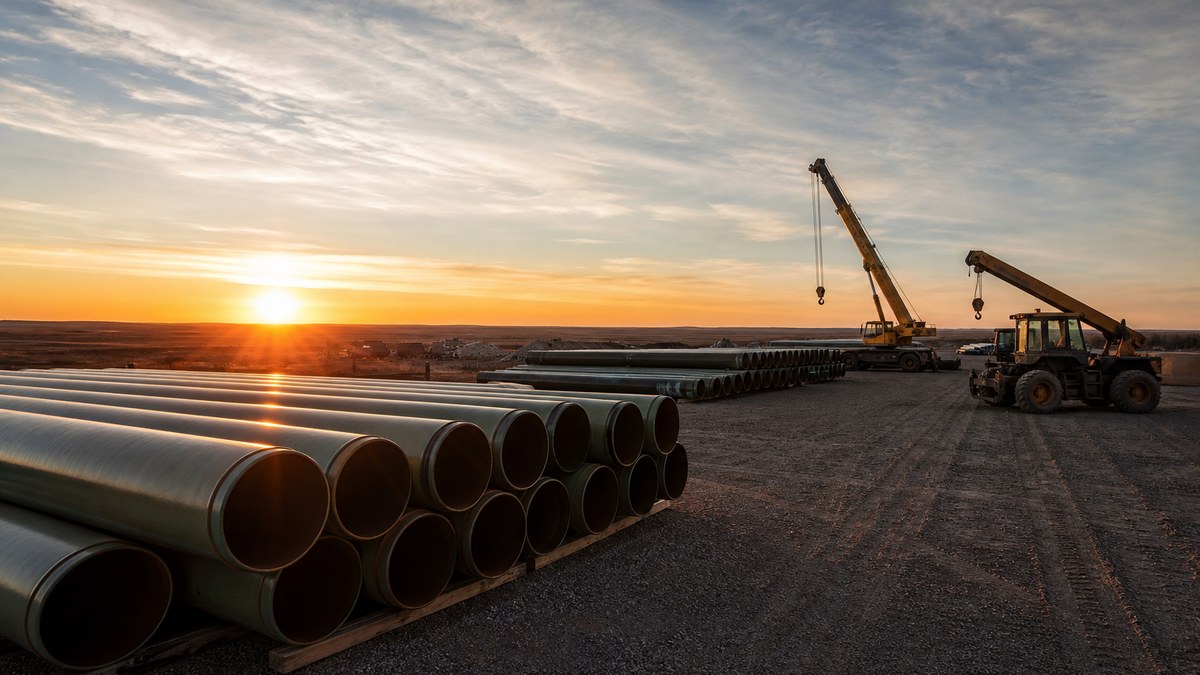
- Pipeline construction. Hundreds of miles of large-diameter pipe need pipe yards, laydown areas, access roads and backfill, which drives demand for rock, sand, gravel and scoria, the business of Kota.
- Water. New pipelines are typically pressure-tested with water before service, and construction camps and yards need water handling. Water transfer and sourcing is the work we did through Bullrock Water.
- Waste and fluids. Facility construction, pigging and well work generate fluids and solids that need compliant disposal, the field Bullrock operated in.
- Gathering and processing. More gas per barrel means more gathering, more processing capacity and more NGL handling in the field, even before the big pipelines arrive.
The overlap of Bakken East and the Intensity line in 2028–2030 is the planning issue for contractors: two major projects in the same state, in the same construction seasons, drawing on the same labor pool and supply chain.
Working on a gas, midstream or infrastructure project in North Dakota?
Raptor Energy Partners advises operators, landowners, developers and service companies on energy projects, land and partnerships in the Bakken, drawing on businesses we have built and operated in the field. Tell us what you are working on.
Talk to Tom and BrettWho should pay attention to North Dakota's gas buildout?
Operators and producers
Gas takeaway now shapes drilling plans. Rising gas-to-oil ratios mean new wells need confirmed gathering and processing capacity before they come online. Watch Bakken xPress flows, the Bakken East and Intensity construction schedules, and capacity on Northern Border and Alliance when planning 2027–2030 programs.
Landowners and mineral owners
Gas that is captured and sold can generate royalty income; gas that is flared generally does not produce the same value. Landowners along the Bakken East and Intensity routes will see survey requests, easement negotiations and construction. This is general information, not legal advice; review leases, easement offers and surface agreements with independent counsel.
Service companies and contractors
Expect a shift toward compression, facilities and pipeline work, with two large in-state pipeline programs overlapping from 2028. Lead times for compressors and high-pressure equipment are already a constraint in the basin, so early positioning matters.
Developers, utilities and investors
New in-state gas supply is being marketed as the base for gas-fired power and data centers in central and eastern North Dakota. Developers should follow where uncommitted pipeline capacity and new power generation will be located. Nothing here is investment advice or an offer of any security.
Project status at a glance
| Item | Proposed / approved / under way / operating | Source and date |
|---|---|---|
| Statewide gas capture 95.8%, flaring 155.4 MMcf/d | Reported (August 2026 data) | ND DMR, Oct 20, 2026 |
| NDIC gas capture goal of 91% | In effect since Nov 1, 2020 | ND DMR |
| Bakken xPress / Bison XPress (300,000 Dth/d) | Built; Northern Border portion in service; southbound flows pending lease and interconnect resolution; listed as delayed | TC Energy 2Q26 via East Daley, Aug 28, 2026; ND DMR, Oct 20, 2026 |
| Bakken East (1.4 Bcf/d, $2.7–3.2B) | Approved: final investment decision Sept 30, 2026; construction 2028–2030 | MDU Resources, Sept 30, 2026 |
| Intensity phase one (about 1.1 million Dth/d) | Proceeding on binding commitments; targeted 2029 | Intensity / Rainbow via Offshore Technology, Jan 7, 2026 |
| Intensity phase two (430,000 Dth/d) | Proposed; target January 2030 | ND Pipeline Authority, Jan 23, 2026 |
Frequently asked questions
How much natural gas does North Dakota produce?
North Dakota produced 3.633 billion cubic feet of natural gas per day in August 2026, according to the Department of Mineral Resources. That followed 3.622 Bcf per day in July and a reported record of 3.58 Bcf per day in June 2026.
How much gas is flared in North Dakota?
About 155.4 million cubic feet per day was flared statewide in August 2026, down 17.9 million cubic feet per day from July. Statewide gas capture was 95.8 percent and Bakken capture was 96.1 percent.
What is North Dakota's gas capture goal?
The North Dakota Industrial Commission's current gas capture goal is 91 percent, in place since November 1, 2020, under the framework of Order 24665. Statewide capture has been above that goal throughout 2026.
Why is the Bakken producing more gas relative to oil?
Wells produce a higher share of gas as they age and reservoir pressure falls, and drilling is moving into naturally gassier areas as core acreage is used up. The state's gas-to-oil ratio reached a reported record of 3.03 Mcf per barrel in July 2025, and August 2026 figures imply about 3.13.
What is Bakken xPress?
Bakken xPress is a TC Energy and Kinder Morgan project to move about 300,000 dekatherms per day of Bakken gas south to the Cheyenne hub by upgrading Northern Border compression and reversing the Bison pipeline. It cost about 555 million dollars according to the North Dakota Pipeline Authority.
Is Bakken xPress in service?
Partly. TC Energy said the Northern Border work was complete and in service in its second quarter 2026 results, but East Daley reported in August 2026 that no gas had yet flowed south on Bison because of a lease and interconnect dispute. The DMR listed the project as delayed in October 2026.
When will the Bakken East pipeline be finished?
WBI Energy reached a final investment decision on September 30, 2026. Construction is planned for 2028 through 2030, with phase one to central North Dakota expected in late 2029 and phase two to near Fargo in late 2030.
What is the Intensity pipeline in North Dakota?
It is a proposed in-state natural gas pipeline from Intensity Infrastructure Partners and Rainbow Energy Center. Phase one is 136 miles of 36-inch pipe from the Watford City area to Washburn with about 1.1 million dekatherms per day of capacity, and the partners said in January 2026 they would proceed with it.
Where does Bakken natural gas go?
About 80 to 85 percent goes to Chicago and the Midwest, mainly on Northern Border and Alliance, about 5 to 10 percent is used locally in North Dakota and eastern Montana, and about 5 percent goes to the Rocky Mountain region, according to North Dakota Pipeline Authority estimates reported in 2025.
How can Raptor Energy Partners help with gas and pipeline projects?
We advise operators, landowners, developers and service companies on energy projects, land and partnerships in North Dakota, drawing on businesses we have built and operated in oilfield waste, water, aggregate, equipment and gaskets. Email tom@raptorenergypartners.com or brett@raptorenergypartners.com.
Keep reading
Sources
- North Dakota Department of Mineral Resources, Director's Cut, October 20, 2026 (August 2026 production, gas capture, flaring and pipeline project status).
- Prairie Public, North Dakota oil production, price continue to outpace forecasts (October 21, 2026) and Natural gas pipeline projects progressing (February 25, 2026).
- Minot Daily News, ND natural gas production sets new record (August 25, 2026).
- North Dakota Pipeline Authority, January 23, 2026 press event slides (Bakken xPress, Bakken East and Intensity project details).
- MDU Resources / WBI Energy, WBI Energy reaches positive final investment decision to build Bakken East pipeline (September 30, 2026).
- Pipeline & Gas Journal, Proposed $3.2 billion Bakken East pipeline draws strong shipper interest (May 7, 2026) and Bakken gas capacity set to rise as Bison XPress nears full service (April 15, 2026).
- East Daley Analytics, Red tape snares Bison XPress expansion (August 28, 2026).
- Offshore Technology via Yahoo Finance, Intensity, Rainbow set to proceed with phase one of North Dakota gas pipeline (January 7, 2026).
- North Dakota Monitor, WBI to receive $500M state financial guarantee to build natural gas pipeline in North Dakota (August 21, 2025).
- KFYR-TV, A time to act: natural gas production in the Bakken (May 21, 2026).
- NGI, Bakken gas-to-oil ratios reach new record as natural gas pipeline projects advance (September 29, 2025) and Kinder Morgan, TC Energy approved for Bakken natural gas egress projects (October 28, 2024).
- U.S. Department of Energy, North Dakota natural gas flaring and venting regulations (summary of NDIC Order 24665).
- Energies Media, At a Bakken oil pad, gas once burned off in a flare feeds mobile data centers (October 26, 2026).
This article is general information about natural gas production, regulation and proposed and approved pipeline projects in North Dakota, based on the sources listed and current as of October 27, 2026. Production figures, project costs, capacities and timelines can change. It is not investment, legal, tax or financial advice, and nothing here is an offer to sell or a solicitation to buy any security.