
Home › Bakken Insights › Crack the Code 2.0
Oil & Gas Production · North Dakota
Crack the Code 2.0: enhanced oil recovery in the Bakken, phase one and phase two
A $157 million program is putting six large enhanced oil recovery pilots into Bakken wells, and on October 16, 2026 state and federal leaders launched a roughly $400 million phase two built around whole-field testing. Here is what is funded, what is permitted, what is still proposed, and what it means for operators, mineral owners and service companies.
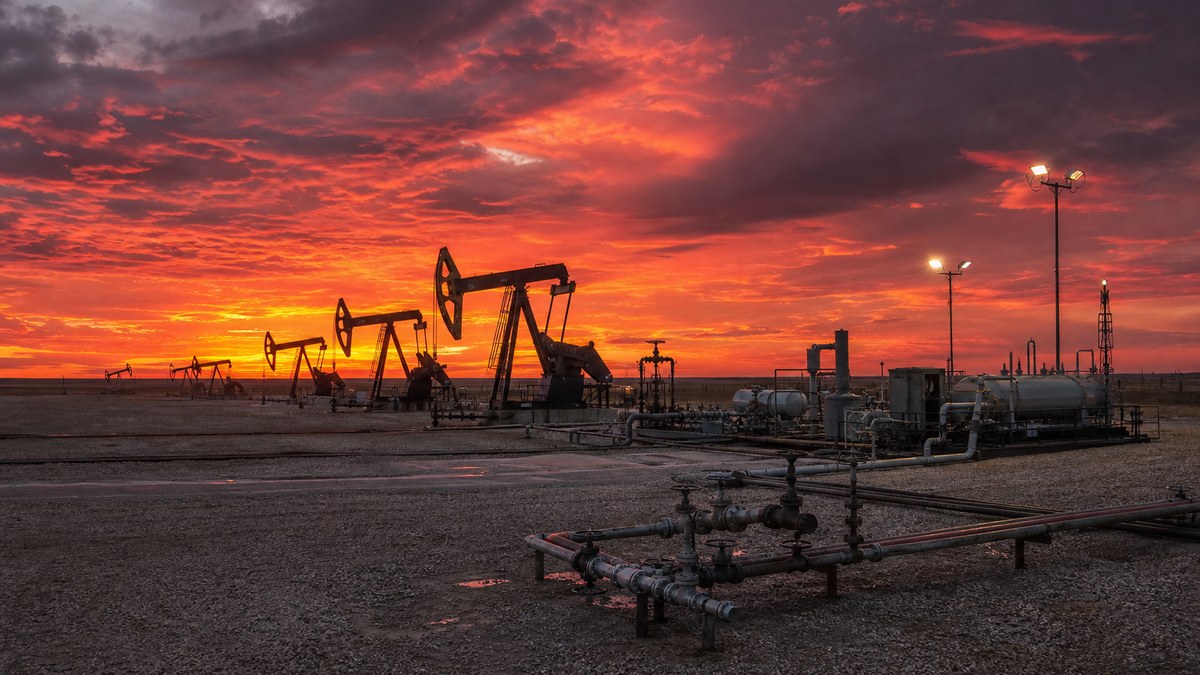
Crack the Code 2.0 is a $157 million initiative led by UND's Energy & Environmental Research Center (EERC) to prove enhanced oil recovery (EOR) in the Bakken by injecting produced gas, and later CO2, into existing wells. As of October 16, 2026, three of six phase-one pilots are underway; a roughly $400 million, 200-well phase two is proposed but not yet funded.
- Lead: the EERC at the University of North Dakota, with the State of North Dakota, the North Dakota Petroleum Council and the U.S. Department of Energy.
- Phase one funding: $157 million: $36 million federal (DOE), $45 million from the state through the North Dakota Industrial Commission, and $76 million from industry.
- Phase one status: six large-scale pilots; three underway, one injection permit issued, two awaiting Industrial Commission approval (Sen. Hoeven, October 16, 2026).
- Phase two (proposed): whole-field EOR with up to 200 test wells, estimated at about $400 million, near an existing CO2 source such as Dakota Gasification Company. Funding is being sought, including DOE loan guarantees.
- Prize: producers recover only about 10–12% of the oil in place today; the EERC estimates EOR could add 5–7 billion barrels.
- Incentive: the 2025 One Big Beautiful Bill Act raised the federal 45Q credit for CO2 used in EOR to parity with geologic storage, $85 per ton.
The Bakken has a recovery problem that has nothing to do with how much oil is in the ground. Horizontal drilling and multi-stage fracturing, the first "crack the code" breakthrough of the late 2000s, unlocked the play and turned North Dakota into the second-largest oil-producing state. But a typical Bakken well still leaves the large majority of the oil it touches in the rock. The primary production curve falls steeply in the first few years, and then the well settles into a long, slow decline.
Crack the Code 2.0 is the state's and the industry's attempt to change that curve. Instead of drilling a new well for every new barrel, operators would inject gas into existing wells to repressurize the reservoir, swell the oil and push more of it out. If it works at commercial scale, it could extend the life of the Bakken by decades, keep rigs and service crews busy, give North Dakota's coal and gasification plants a buyer for their CO2, and add billions of barrels to what the basin will ultimately produce.
In our overview of new Bakken projects we listed enhanced oil recovery as one of the five themes shaping North Dakota through 2030. This article goes deeper: what has been funded and permitted, what the October 16, 2026 phase two announcement actually commits to, what earlier pilots showed, how the 45Q tax credit changes the math, and where the risks are.
What is Crack the Code 2.0?
Crack the Code 2.0 (often shortened to CTC2.0) is a research-to-deployment program to demonstrate enhanced oil recovery technologies in the Bakken and Three Forks at pilot and then field scale. It is led by the EERC, the research center at UND that has worked on Bakken reservoir science for more than a decade, and championed by U.S. Sen. John Hoeven, with support from Gov. Kelly Armstrong, the North Dakota Industrial Commission and the North Dakota Petroleum Council.
The name is a deliberate echo. In Hoeven's words at the February 20, 2026 launch at the EERC, "We cracked the code initially to produce oil and gas out of the Bakken." The first code was getting oil out of tight rock at all. The second is getting far more of it out of wells that already exist.
The program has two linked goals:
- More oil from existing wells. Prove that gas injection can raise recovery economically, not just technically.
- A market for captured CO2. Pair EOR with carbon capture at North Dakota's coal-fired power plants, the Dakota Gasification Company's Great Plains Synfuels Plant and ethanol facilities, so captured CO2 becomes a commodity that oil producers pay for. Hoeven has said this could "double the life of our coal fired electric industry."
The EERC describes the near-term work this way: phase one uses produced gas from existing oil operations to evaluate EOR technologies and gather field data, because large, reliable CO2 supplies and the pipelines to deliver them will take years to build (EERC, August and September 2026).
How is phase one funded, and where does it stand?
The funding stack has been consistent across the EERC, Sen. Hoeven's office and the North Dakota Monitor since the spring of 2026:
| Source | Amount | Notes |
|---|---|---|
| U.S. Department of Energy | $36 million | Federal award for phase one, announced and officially awarded in spring 2026 |
| State of North Dakota | $45 million ($45.1M) | Through the North Dakota Industrial Commission |
| Industry | $76 million | Reported by the North Dakota Monitor as coming from four oil companies running the pilots |
| Total phase one | $157 million | Six large-scale pilot projects in the Bakken |
| DOE–EERC cooperative agreement (related) | $25 million over five years | Renewed in February 2026; supports EERC research capacity |
At the October 16, 2026 press conference in Bismarck, Hoeven gave the most precise status update to date: "Phase one of Crack the Code 2.0 is well underway, with a total of six large-scale pilot projects moving forward." Of the six, three are underway, one has received its injection permit, and two are awaiting approval from the North Dakota Industrial Commission. The operators of individual pilots have not been publicly named in the sources we reviewed, so we do not name them here.
The scale is what makes this round different. According to the North Dakota Monitor (May 2026), the new pilots are 10 to 20 times larger in duration and volume than earlier Bakken EOR tests, and a single pilot covering two square miles can cost up to $30 million. In May, Petroleum Council president Ron Ness expected technology deployment in late 2026 or early 2027 and early results roughly a year after pilots begin. In October, Ness acknowledged the work has been harder than expected, citing time delays and longer waits for equipment such as compressors.
The detail that stood out to us on October 16 was not the $400 million headline, it was Ness talking about compressor lead times. EOR pilots live or die on surface equipment: compression, high-pressure piping, metering, seals and gaskets that hold up through repeated injection and production cycles. In our experience supplying niche oilfield equipment and parts in the Bakken, long-lead items quietly set the schedule. Anyone hoping to serve these projects should be thinking about inventory and lead times now, not when phase two is funded.
What did the October 16, 2026 phase two announcement commit to?
Phase two moves from individual wells to a whole field. As Hoeven put it to KFYR, "We're essentially going from individual wells with EOR to developing a whole field." The announcement, made with Gov. Armstrong, U.S. Under Secretary of Energy Kyle Haustveit, Agriculture Commissioner Doug Goehring, Ron Ness and Chord Energy President and CEO Danny Brown, laid out the following:
- Scope: up to 200 field test wells in a single field.
- Location priority: a field close to an existing CO2 source, such as the Dakota Gasification Company, and near existing pipelines and infrastructure.
- Cost: about $400 million for the field test wells.
- Funding approach: Hoeven is working with DOE to make loan guarantee authority available; his office notes DOE's Office of Energy Dominance had more than $289 billion in loan authority at the end of 2025. The state and the Petroleum Council are seeking more industry partners.
- Added revenue streams: developing lignite as a source of rare earth elements and critical minerals, and expanding fertilizer production at Dakota Gasification's Great Plains Synfuels Plant.
It is important to be precise about status. Phase two is proposed. As of October 23, 2026 there is no published final funding package, no named field, no named operators and no start date. What exists is a stated plan, a cost estimate and a financing strategy.
Why does the Bakken need enhanced oil recovery?
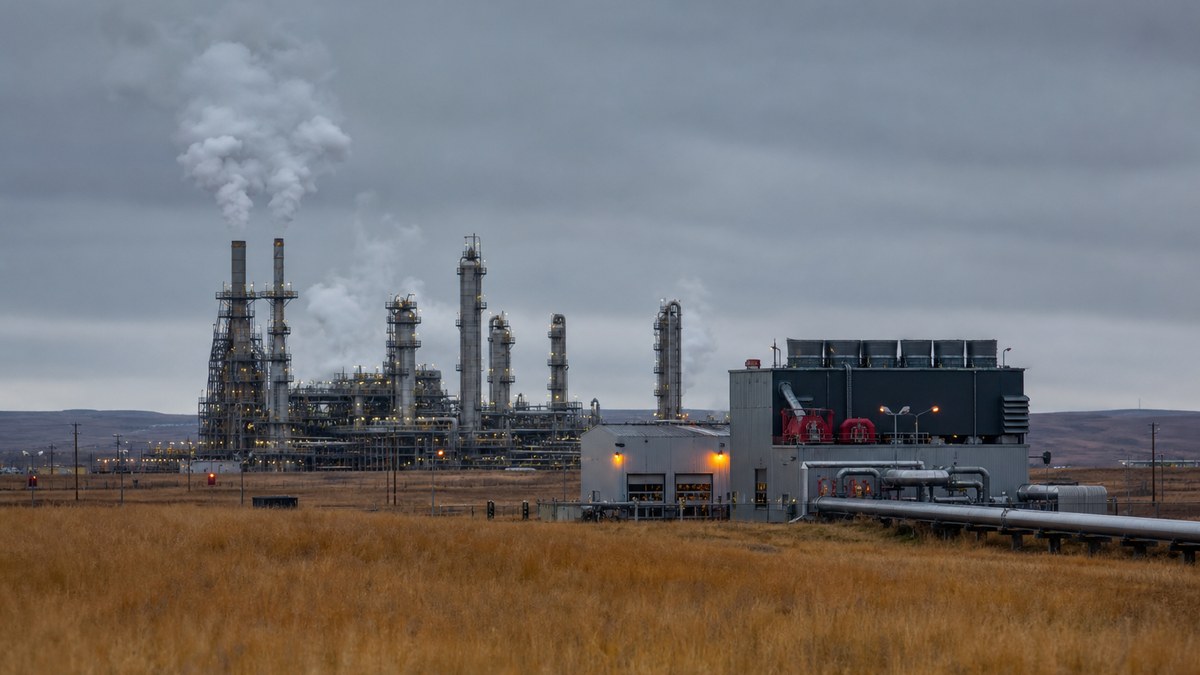
Because the rock holds far more oil than primary production can reach. The North Dakota Geological Survey estimated original oil in place in the Bakken petroleum system at roughly 600 billion barrels (2011), while the U.S. Geological Survey's 2013 assessment put technically recoverable resources at about 7.4 billion barrels (both cited in EERC's 2020 DOE project review). Sen. Hoeven has repeatedly said producers recover only about 10 to 12 percent of the oil in the shale, and that advanced EOR could raise that to 25 percent or more.
The basin has produced more than 5.9 billion barrels to date (EERC, August 2026), and Bakken production since 2007 has generated more than $35 billion in tax revenue. The EERC estimates EOR could produce an additional 5 to 7 billion barrels (September 2026). EERC CEO Charles Gorecki has offered a wider range of 5 to 20 billion barrels from North Dakota formations if the technology is proven (February 2026).
Today's production is strong, which is part of why the timing matters. The DMR's October 20, 2026 Director's Cut reported August numbers:
| Indicator (ND DMR, August 2026) | Figure | Why it matters for EOR |
|---|---|---|
| Oil production | 1,161,427 bbl/d | 5.58% above the state's 1.1 million bbl/d revenue forecast |
| Bakken / Three Forks share | 1,132,946 bbl/d (97.5%) | Almost all output comes from the formations EOR targets |
| Producing wells | 20,177 (all-time high) | A huge inventory of existing wells that could be candidates for injection |
| Gas production | 3.633 Bcf/d | Produced gas is the phase-one injectant |
| Gas capture / flaring | 95.8% statewide; 155.4 MMcf/d flared | Reinjecting gas is one more outlet when takeaway is tight |
| Rigs / permits / completions | 24 rigs; 84 permits; 96 completions | New drilling continues alongside EOR |
| ND market oil price | $76.14/bbl | 33.6% above the $57 revenue forecast |
The long-term issue is the drilling inventory. Every year operators drill out more of the best remaining locations. Longer laterals have stretched that inventory, but at some point the growth has to come from getting more out of what has already been drilled. EOR is the main candidate, which is why the state, the industry and federal agencies are all putting money behind it.
How does enhanced oil recovery work in tight Bakken rock?
Conventional CO2 floods, like those in the Permian Basin or at Weyburn in Saskatchewan, push CO2 from injection wells through permeable rock toward separate producing wells. Bakken rock is too tight for that kind of sweep. Most Bakken EOR concepts instead rely on cyclic injection, often called "huff-and-puff":
- Huff: inject gas into a producing well (or a group of wells) for weeks.
- Soak: shut the well in so the gas can mix with the oil in the fractures and the rock matrix.
- Puff: return the well to production. The gas has swelled the oil and lowered its viscosity, so more of it flows back.
Two injectants are in play. Produced gas (rich gas, a mix of methane, ethane and propane) is available on site today. CO2 mixes with Bakken crude at reservoir pressures and has a long track record in conventional EOR. The EERC reports that lab tests on Bakken rock recovered similar amounts of oil with produced gas and with CO2, and that produced gas behaves much like CO2 in swelling the oil. That is why phase one starts with produced gas while CO2 supply and pipelines are developed.
The Haustveit quote from the February launch captures the geology neatly: he called the Bakken an "Oreo cookie," with shale above and below the reservoir layers, which helps keep injected gas, including CO2, where it is placed.
What did earlier Bakken EOR pilots show?
Crack the Code 2.0 builds on roughly 15 years of smaller tests. A few data points from the public record:
- Stomping Horse rich gas pilot (2017–2019). Liberty Resources approached the EERC in December 2016, and the work was funded in 2017 by DOE NETL and the North Dakota Oil and Gas Research Program. By the end of May 2019, about 160 million standard cubic feet of produced gas had been injected into five wells over six injection periods using multiwell huff-and-puff. Injectivity was readily established, pressure buildup was achieved and the gas stayed within the drilling spacing unit (EERC, October 2020).
- Field results to date. The EERC reports early field tests increased oil production by approximately 24% in certain injection wells, and that projects recovered an estimated 4,000 to 5,000 or more additional barrels per drilling area over several years. The tests were small and relatively short (EERC, September 2026).
- The catch. Lynn Helms, the state's former top oil regulator and now the Petroleum Council's EOR lead, summarized it bluntly in May 2026: "We've had smaller demonstration projects that have shown we can increase oil recovery, but not at economic levels."
That is the real purpose of phase one. The technical question (can injection add oil?) has largely been answered yes. The commercial question (can it add enough oil, at a low enough cost per barrel, across enough wells?) has not.
We would read the next 12 to 18 months of pilot data the way an operator would: incremental barrels per dollar of injected gas and surface equipment, not percentage uplift. A 24% bump on a low-rate, late-life well can still be uneconomic. The pilots that matter are the ones that show repeatable results across a full spacing unit, with compression and gas handling costs that can be spread over dozens of wells. That is exactly why phase two is framed around a whole field rather than more single-well tests.
How does the 45Q tax credit change the economics?
The federal 45Q credit pays for each metric ton of captured carbon oxide that is stored or used. Before 2025, CO2 used for enhanced oil recovery earned less than CO2 sent to dedicated geologic storage: $60 per ton versus $85 for point-source capture. The One Big Beautiful Bill Act, signed July 4, 2025, raised the EOR and utilization value to parity with storage (Payne Institute, Colorado School of Mines). The North Dakota Monitor reports the credit at $85 per ton of CO2 for these projects. Hoeven has said he secured that change specifically with EOR in mind.
Parity matters because it can let one ton of CO2 earn the same credit while also producing oil, so the capture plant, the pipeline and the oil producer can share two revenue streams instead of one. It does not solve the hardest pieces: building capture equipment at coal plants, permitting and building CO2 pipelines, and proving that Bakken wells can use enough CO2 per barrel to make the system work. The North Dakota Monitor also reported that EOR would need to be used "in a significant way" by December 2031 to benefit from the credit, which adds urgency to the timeline. Tax rules are complex; operators and capture developers should get qualified tax advice on how 45Q applies to their own projects.
Where would the CO2 come from?
North Dakota has an unusual advantage: large, concentrated CO2 sources within a few hundred miles of the Bakken.
| CO2 source | Role in the EOR plan | Status (Oct 2026) |
|---|---|---|
| Produced gas from Bakken wells | Phase-one injectant while CO2 supply is developed | Available now; in use in pilots |
| Dakota Gasification Co., Great Plains Synfuels Plant (Beulah) | Named example of an existing CO2 source for phase two; already captures CO2 for EOR at Weyburn, Canada (25+ years) | Operating; phase-two field not yet selected |
| Coal-fired power plants | Long-term CO2 supply; Hoeven says EOR could extend plant life | Proposed; capture and pipelines not yet built for Bakken EOR |
| Ethanol facilities | Smaller, high-purity CO2 streams | Named by EERC as a long-term source |
The EERC notes that widespread CO2 use would require a large supply of relatively pure CO2 and significant pipeline investment, and that securing that supply "could take several years." The next phase of research will look at the infrastructure needed to move CO2 from sources such as coal plants to oil fields, including pipelines, compression and injection. That is also why phase two prioritizes a field near an existing source and existing pipelines: it avoids waiting for a statewide CO2 network.
What are the risks and open questions?
- Economics are unproven. Earlier pilots added oil but not at economic levels. Phase one exists to answer that.
- Equipment and schedule. Ness has flagged delays and long lead times for compressors. Pilot results originally expected around May 2027 may slip.
- Permits. Two of six phase-one pilots were still awaiting Industrial Commission approval on October 16, 2026.
- Phase two financing. The roughly $400 million phase two depends on loan guarantees and new industry partners that have not been announced.
- Research capacity. The North Dakota Monitor reported in May 2026 that funding delays had led the EERC to cut 27 positions and furlough 13 employees, with plans to rehire when funding arrives.
- Gas balance. Gas used for injection is gas not sold. Operators will weigh EOR against takeaway projects such as the Bakken East pipeline, which are expanding gas sales outlets later this decade.
- Oil prices. Today's ND price is well above the state forecast, but EOR is a long-cycle investment that has to work through price downturns.
What does Crack the Code 2.0 mean for service companies?
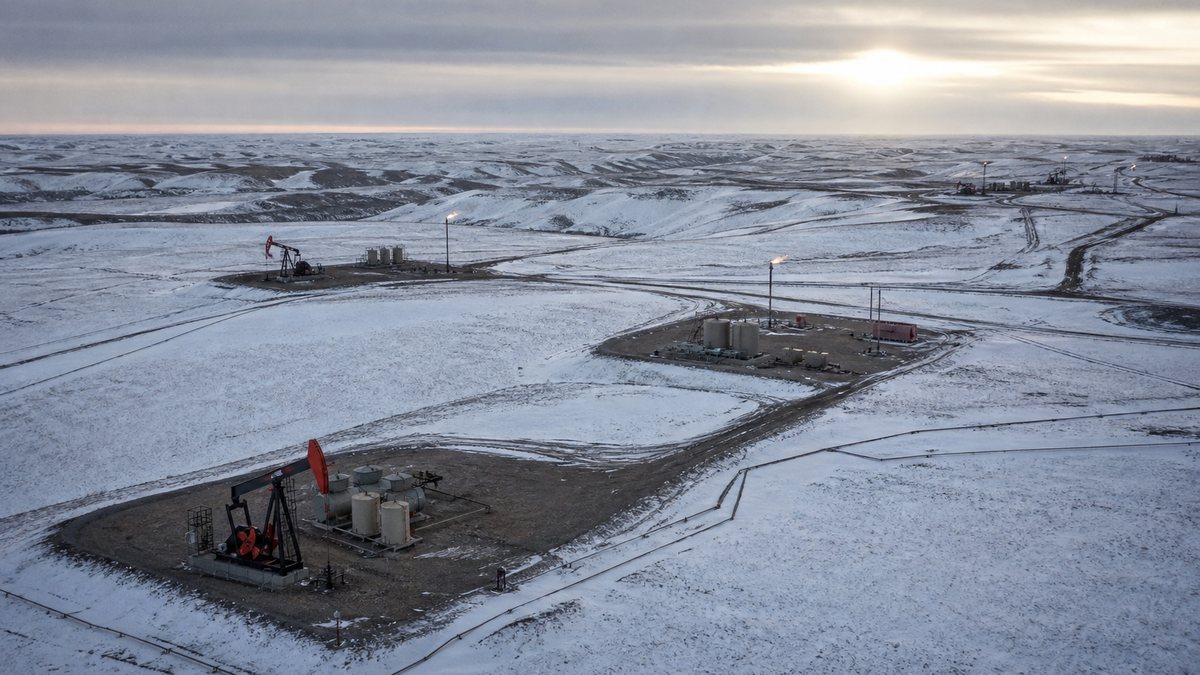
EOR changes the type of work in the Bakken. Instead of only drilling and completing new wells, it adds surface facilities and repeated well work on existing pads. Based on how the pilots are described, the demand categories include:
- Compression and gas handling: injection compressors, high-pressure lines, metering and controls.
- Equipment, parts and sealing: cyclic injection puts repeated pressure and temperature swings on wellheads, flanges and connections. This is the niche our team knows from Raptor Supply and Raptor Gaskets.
- Water: returning wells to production after injection still brings back produced water that must be transferred, handled and disposed of, the kind of work we did through Bullrock Water.
- Waste handling: well work and facility construction generate fluids and solids that need compliant disposal, the field Bullrock operated in.
- Pads and access: new facility pads, laydown areas and road upgrades need aggregate, the business of Kota.
- Monitoring and engineering: reservoir surveillance, tracer work and data collection for the EERC and operators.
If phase two goes ahead at 200 wells, it becomes a sustained program in one field rather than scattered pilots, which is more attractive for local contractors to staff and equip.
Planning around Bakken EOR?
Raptor Energy Partners advises operators, landowners, developers and service companies on energy projects in North Dakota, drawing on businesses we have built and operated in the Bakken. Tell us what you are working on.
Talk to Tom and BrettWho should pay attention to Crack the Code 2.0?
Operators and producers
Phase one data will show whether EOR can become a real development option for mature spacing units. Operators with large inventories of older wells near gas infrastructure, or near a CO2 source like Beulah, are the natural candidates for phase two partnership talks that the state and the Petroleum Council have said they are seeking.
Landowners and mineral owners
EOR could extend the producing life of existing wells, which matters for long-term royalty income. Surface owners near pilot or phase-two areas may see new facilities, compression and pipeline work. Injection requires Industrial Commission permits, and those dockets are public. This is general information, not legal advice; review leases and surface agreements with independent counsel.
Service companies and contractors
EOR shifts demand toward compression, gas handling, high-pressure equipment and repeated well work. Lead times are already a constraint, according to the Petroleum Council, so early positioning matters.
Developers, utilities and investors
Crack the Code links oil, coal, gasification and CO2 pipelines. Coal plant owners, capture developers and infrastructure developers should watch which field is chosen for phase two and how loan guarantees are structured. Nothing here is investment advice or an offer of any security.
Project status at a glance
| Item | Proposed / approved / under way | Source and date |
|---|---|---|
| Phase one funding ($157M) | Funded: DOE $36M, state $45M, industry $76M | EERC; Sen. Hoeven, Oct 16, 2026 |
| Phase one pilots (6) | 3 under way; 1 injection permit issued; 2 awaiting NDIC approval | Sen. Hoeven, Oct 16, 2026 |
| Phase two whole-field test (up to 200 wells, ~$400M) | Proposed; financing and partners being sought | Sen. Hoeven; KFYR, Oct 16, 2026 |
| CO2 supply for Bakken EOR from coal plants | Proposed long-term goal | EERC, Aug–Sept 2026 |
| 45Q parity for EOR ($85/ton) | Enacted (July 4, 2025) | Payne Institute; ND Monitor, May 2026 |
Frequently asked questions
What is Crack the Code 2.0?
Crack the Code 2.0 is a 157 million dollar program led by UND's Energy and Environmental Research Center to prove enhanced oil recovery in the Bakken. It injects produced gas, and later captured CO2, into existing wells to recover more oil, with funding from the Department of Energy, the State of North Dakota and oil companies.
How much funding does Crack the Code 2.0 have?
Phase one has 157 million dollars: 36 million from the U.S. Department of Energy, 45 million from the State of North Dakota through the Industrial Commission, and 76 million from industry. Phase two is estimated at about 400 million dollars and is not yet funded.
How many Crack the Code 2.0 pilot projects are there?
Six large-scale pilot projects are planned in phase one. As of October 16, 2026, three were underway, one had received its injection permit and two were awaiting approval from the North Dakota Industrial Commission.
What is phase two of Crack the Code 2.0?
Phase two, announced October 16, 2026, would move from individual wells to enhanced oil recovery across a whole field with up to 200 test wells, near an existing CO2 source such as Dakota Gasification Company. It is estimated at about 400 million dollars, with DOE loan guarantees and new industry partners being pursued.
How much more oil could enhanced oil recovery produce in the Bakken?
The EERC estimates enhanced oil recovery could produce an additional 5 to 7 billion barrels. Sen. Hoeven says producers recover only about 10 to 12 percent of the oil in place today and that EOR could raise that to 25 percent or more. These are estimates, not proven reserves.
Why does phase one use produced gas instead of CO2?
Produced gas is already available at Bakken wells, while large CO2 supplies and pipelines will take years to build. EERC lab tests found produced gas recovered similar amounts of oil as CO2 from Bakken rock, so it lets pilots gather field data now.
What is huff-and-puff enhanced oil recovery?
Huff-and-puff is cyclic gas injection. Gas is injected into a well, the well is shut in so the gas can mix with the oil, and then the well is returned to production. It suits tight Bakken rock better than the continuous floods used in conventional reservoirs.
How does the 45Q tax credit apply to Bakken EOR?
The One Big Beautiful Bill Act of July 2025 raised the 45Q credit for captured CO2 used in enhanced oil recovery to parity with geologic storage, reported at 85 dollars per ton. That improves the economics of capturing CO2 at North Dakota plants and selling it to oil producers. Consult a tax advisor for specific projects.
When will Crack the Code 2.0 results be available?
In May 2026 the North Dakota Petroleum Council expected early pilot results around May 2027. In October 2026 it noted delays and long equipment lead times, so results could come later. Phase two has no announced start date.
How can Raptor Energy Partners help with Bakken EOR projects?
We advise operators, landowners, developers and service companies on energy projects, land and partnerships in North Dakota, drawing on businesses we have built and operated in oilfield waste, water, aggregate, equipment and gaskets. Email tom@raptorenergypartners.com or brett@raptorenergypartners.com.
Keep reading
Sources
- Office of Sen. John Hoeven, Hoeven: Efforts begin on phase 2 of Crack the Code 2.0, moving from individual wells to field-scale testing (October 16, 2026).
- KFYR-TV, State leaders announce phase II of the Crack the Code project (October 16, 2026) and North Dakota leaders unveil enhanced oil recovery plan for Bakken (May 8, 2026).
- Ripon Advance, Hoeven provides update on Crack the Code 2.0 (October 19, 2026) and Hoeven pushes Crack the Code 2.0 to boost Bakken output and extend coal plant life (May 5, 2026).
- EERC / UND Today, Cracking the code: extending the life of one of America's most important oil plays (EERC, September 21, 2026; UND Today, October 6, 2026) and EERC carbon capture research looks to unlock more of the Bakken (August 2026).
- North Dakota Monitor (via Kiowa County Press), $157 million oil research effort to boost North Dakota production to start this year (May 2026).
- Grand Forks Herald, EERC receives $25 million as part of initiative to increase state oil recovery (February 2026).
- North Dakota Department of Mineral Resources, Director's Cut, October 20, 2026 (August 2026 production data).
- Prairie Public, North Dakota oil production, price continue to outpace forecasts (October 21, 2026).
- EERC / DOE NETL, Bakken Rich Gas Enhanced Oil Recovery (Stomping Horse field test), project review (October 13, 2020).
- Payne Institute, Colorado School of Mines, Key changes for 45Q tax credits under the One Big Beautiful Bill Act (2025).
This article is general information about energy research and proposed projects in North Dakota, based on the sources listed and current as of October 23, 2026. Funding, pilot status, costs and timelines can change. It is not investment, legal, tax or financial advice, and nothing here is an offer to sell or a solicitation to buy any security.